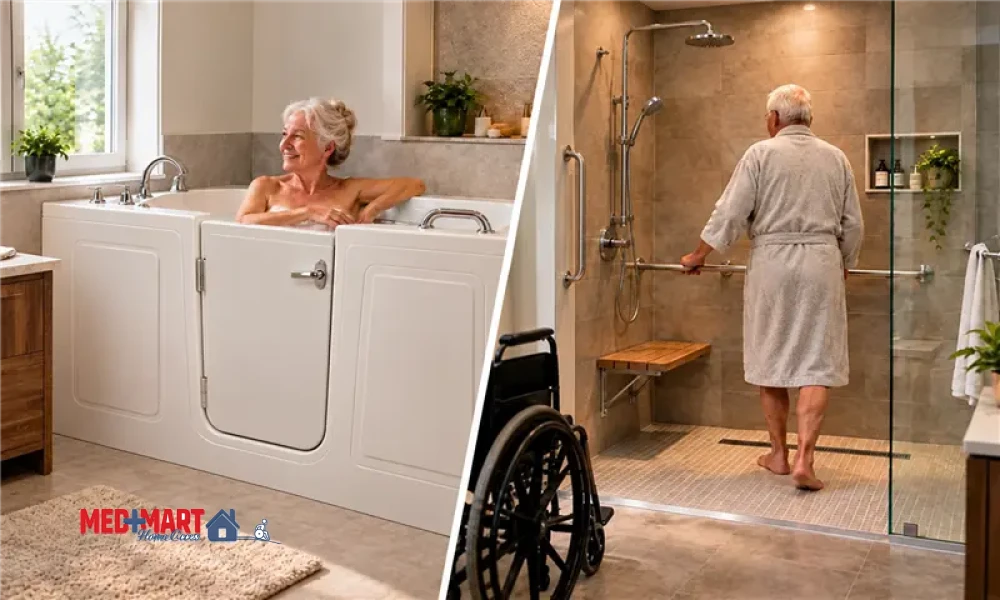
Bathing should feel comfortable and manageable, not like something you have to worry about every day. But when mobility changes, stepping over the side of a traditional bathtub or standing for long periods in a shower can become more difficult.
That’s usually when people start comparing walk-in tubs and walk-in showers.
Both can make a bathroom easier to use, but they solve different problems. A walk-in tub may work well for someone who prefers seated bathing and soaking. A walk-in shower may make more sense for someone who uses a walker or wheelchair, needs caregiver assistance, or wants easier access without waiting for a tub to fill and drain.
The right choice depends on how the person uses the bathroom now and what their needs may look like in the future.
At Med Mart Home, we help families compare home mobility solutions based on the person, the bathroom
layout, and the type of support that makes the most sense in everyday life.
Why Bathroom Safety Should Guide This Decision
Bathrooms can become challenging when balance, strength, or mobility changes.
Wet surfaces, tight spaces, and getting in and out of a tub or shower can all make bathing more difficult. CDC data show that falls are common among adults age 65 and older, which is one reason bathroom accessibility becomes such an important part of planning for aging in place.
What Makes this Choice Important?
- Walk-in tubs and walk-in showers address accessibility in different ways
- Installation requirements can vary depending on the bathroom
- Costs can vary widely based on the unit and the amount of remodeling needed
- The wrong setup may become frustrating or difficult to use
- Future mobility or caregiving needs may affect which option makes more sense long term
It helps to think through those things before making a major bathroom change.
You may also want to consider supportive medical supplies and bathroom-safety features such as grab bars, slip-resistant flooring, shower seating, and handheld showerheads when appropriate for the space.
Understanding Walk-in Tubs and How They Work
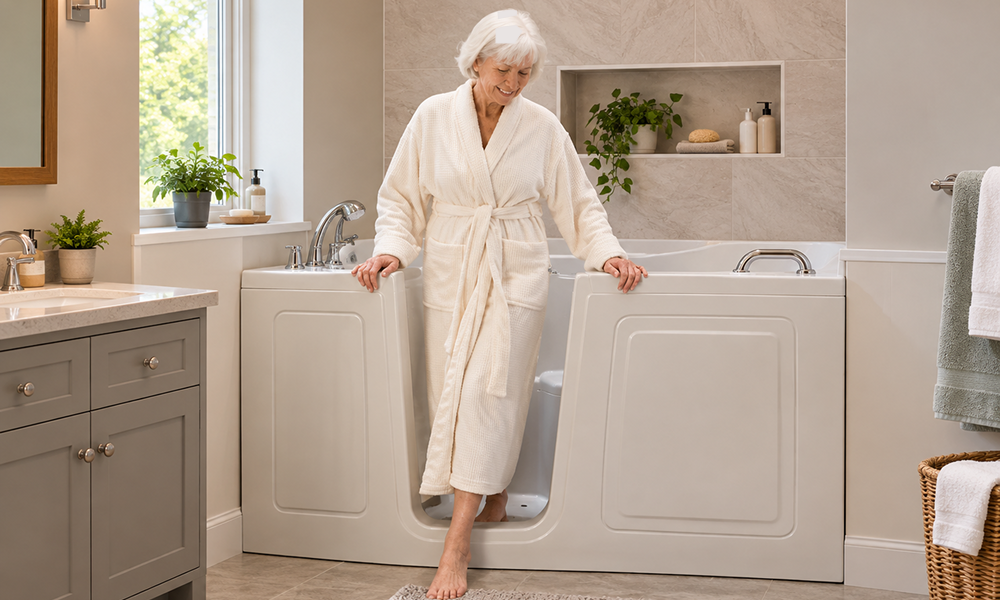
A walk-in tub is a bathtub with a watertight door built into the side. Instead of stepping over the full wall of a
traditional bathtub, the user steps through a lower entry and sits on a built-in seat.
Professional walk-in tub installation may also include features such as grab bars, textured flooring, handheld showerheads, and optional jet systems depending on the model.
One thing people sometimes overlook is that the door has to remain closed while the tub fills and drains. For some users, that’s no problem. For others, especially someone who gets cold easily or has difficulty sitting for longer periods, it’s worth thinking about before making a decision.
Who May Benefit Most From a Walk-in Tub
- Someone who prefers seated bathing
- A person who enjoys soaking instead of taking a quick shower
- Someone who can safely step through the tub entry
- A person who can comfortably remain seated while the tub fills and drains
- Someone interested in optional features such as water jets
- A household where the tub setup works well for the person’s current mobility
Understanding Walk-in Showers and How They Work
A walk-in shower is designed with a lower barrier than a traditional bathtub, and some are built with a completely curbless entry.
That distinction matters.
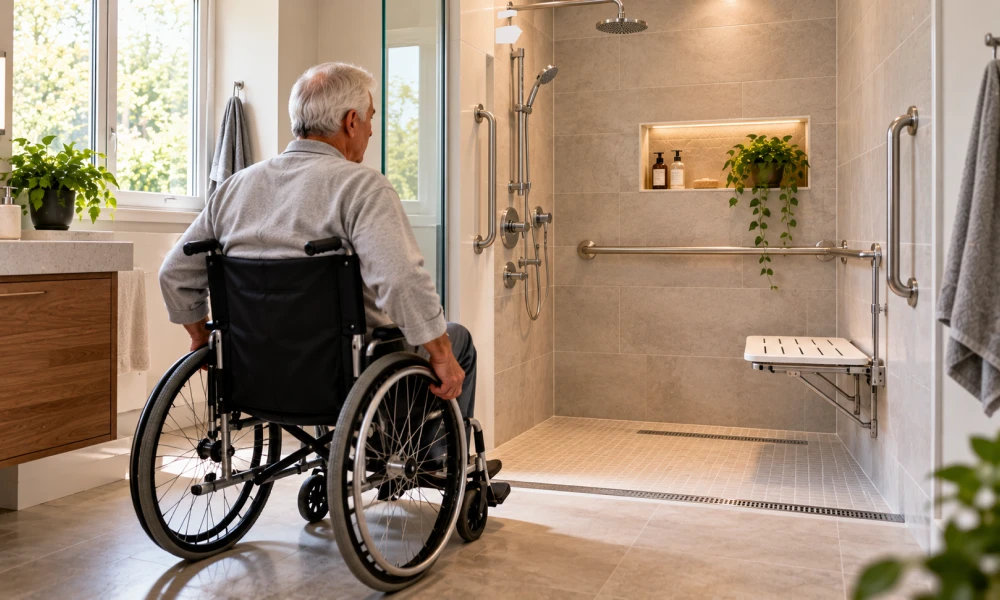
Not every walk-in shower is wheelchair accessible. A true roll-in shower needs to be planned with wheelchair access, turning space, drainage, and the surrounding bathroom layout in mind.
A professionally planned walk-in shower installation can make bathing easier for people who use walkers or wheelchairs and may also provide more room for caregiver assistance.
Who May Benefit Most From a Walk-in Shower
- Someone who uses a walker or wheelchair
- A person who needs caregiver assistance during bathing
- Someone who prefers quick access without waiting for a tub to fill
- A household planning for possible mobility changes
- Someone who wants an open bathing area with fewer barriers
Weighing the Benefits of Walk-in Tubs and Walk-in Showers
First, let’s get a side-by-side look at how both options compare.
| Core Feature | Walk-in Tub | Walk-in Shower |
|---|---|---|
| Entry | Lower threshold with sealed door | Low-threshold or curbless entry |
| Wait Time | Must fill and drain before door opens | No fill or drain wait |
| Wheelchair Accessibility | Depends on model and transfer ability | Can be designed for wheelchair access |
| Optional Comfort Features | May include jets and soaking features | May include seating and handheld showerheads |
| Installation | Varies by bathroom and unit | Varies by bathroom and design |
| Water Usage | Often higher for a full bath | Depends on shower length and fixtures |
| Maintenance | Door seals and optional jets may need attention | Depends on materials and design |
| May Be Best For | Seated bathing and soaking | Easier entry and flexible accessibility |
Now let’s look at the factors that usually matter most when comparing the two.
Safety and Fall Prevention
Both options may reduce some of the barriers found in a traditional bathtub, but they do it differently.
The important question isn’t just “Which one is safer?” It’s “Which one fits the person’s mobility and transfer ability better?”
Walk-in Tub
A walk-in tub reduces the height someone has to step over compared with a traditional bathtub. It also gives the user a built-in seat, so they don’t have to stand for the entire bath.
Safety features may include:
- A watertight door
- Built-in seating
- Textured flooring
- Grab bars
- Handheld showerheads
- Lower entry thresholds
There is still a step involved with most walk-in tubs, so it’s important to make sure the person can manage that entry safely.
Walk-in Shower
A properly designed roll-in or curbless shower can provide much more flexibility for someone using a wheelchair or
walker.
The open entry may make it easier to move into the shower without stepping over a barrier.
Important accessibility considerations include:
- Clear entry width
- Adequate floor space
- Room for turning or repositioning
- Shower seating if needed
- Space for caregiver assistance
- Proper drainage for a curbless design
This can make a walk-in shower a strong option when wheelchair access or caregiver support is a priority.
Accessibility for Wheelchairs and Walkers
If someone uses a wheelchair or walker, the bathroom needs enough room not only to enter the shower but also to move, turn, and transfer if necessary.
That’s where the difference between a walk-in tub and a properly designed roll-in shower becomes more noticeable.
Walk-in Tub
A walk-in tub may be more difficult for someone who uses a wheelchair because the person still has to transfer into
the tub through the door opening.
Depending on the user’s mobility, caregiver help may be needed.
Things to consider include:
- Width of the tub door
- Height of the entry threshold
- Ability to stand or transfer
- Space for a caregiver to assist
- Whether a transfer aid can be used with the particular layout
For someone with limited transfer ability, it’s worth looking closely at how that transfer would actually work
before choosing a tub.
Walk-in Shower
A properly designed roll-in or curbless shower can provide much more flexibility for someone using a wheelchair or walker.
The open entry may make it easier to move into the shower without stepping over a barrier.
Important accessibility considerations include:
- Clear entry width
- Adequate floor space
- Room for turning or repositioning
- Shower seating if needed
- Space for caregiver assistance
- Proper drainage for a curbless design
This can make a walk-in shower a strong option when wheelchair access or caregiver support is a priority.
Bathing Comfort and Relaxation
Comfort means different things to different people.
Some people want to sit and soak. Others would rather get in, shower, and move on with their day.
Walk-in Tub
A walk-in tub is designed for seated bathing and soaking.
Depending on the model, it may also include optional features such as water or air jets.
Comfort features may include:
- Built-in seating
- Deeper water than a traditional bathtub
- Optional jet systems
- Handheld showerheads
- Adjustable water temperature
For someone who enjoys soaking, a walk-in tub may feel more relaxing than a standard shower.
Walk-in Shower
A walk-in shower gives the user faster access because there’s no need to wait for a tub to fill or drain.
A seat and handheld showerhead can also allow someone to bathe while sitting.
Comfort features may include:
- Shower seating
- Handheld showerheads
- Adjustable spray settings
- Open floor space
- Easy entry and exit
For someone who values convenience or doesn’t want to sit through a full bath, a shower may be the better fit.
Installation and Cost Considerations
There isn’t one simple rule that says one option will always cost more than the other.
The final cost depends on the bathroom, plumbing, materials, accessibility features, and how much remodeling is needed.
Walk-in Tub
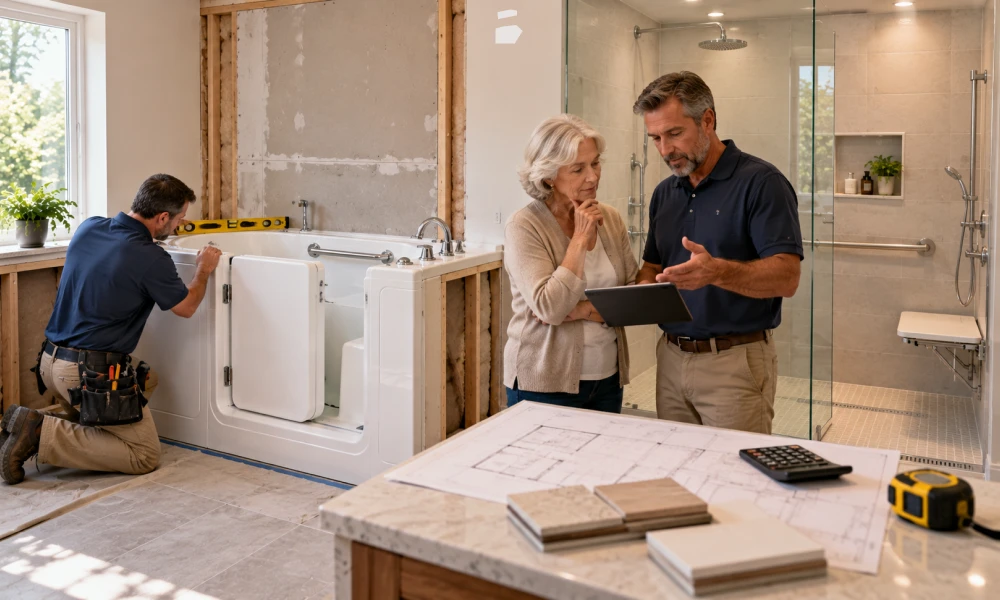
A walk-in tub may require changes to the existing plumbing or surrounding bathroom area.
Some homes may also need to consider the available hot water supply depending on the size of the tub.
Cost factors may include:
- The tub itself
- Door and seal design
- Optional jet systems
- Plumbing modifications
- Electrical requirements for certain features
- Surround or flooring work
- Possible water-heater considerations
Professional installation can help determine what the bathroom actually needs before work begins.
Walk-in Shower
A basic tub-to-shower conversion may be fairly straightforward, but a fully custom curbless or wheelchair-accessible shower may require much more extensive work.
Cost factors may include:
- Existing bathroom layout
- Plumbing and drainage changes
- Waterproofing
- Custom tile or wall panels
- Shower seating
- Grab bars
- Floor modifications for a curbless entry
- Space needed for wheelchair access
This is why it’s difficult to compare prices without looking at the bathroom first.
Long-Term Independence and Caregiving
One of the best questions to ask is whether the bathroom will still work if the person’s mobility changes later.
A setup that works perfectly today may become harder to use if a walker, wheelchair, or caregiver is needed in the future.
Walk-in Tub
A walk-in tub may work well for someone who can safely enter through the door and prefers seated bathing.
It may become more difficult to use if transferring gets harder later.
Long-term considerations include:
- Whether the person can continue stepping into the tub
- Whether they can transfer safely to the seat
- Whether caregiver assistance will fit comfortably in the space
- Whether wheelchair use may become part of the routine later
For someone with relatively stable mobility, a walk-in tub may continue to work very well.
Walk-in Shower
A properly designed walk-in or roll-in shower may provide more flexibility as mobility needs change.
An open layout can make it easier to add seating, accommodate a walker or wheelchair, or give a caregiver more space to assist.
Long-term considerations include:
- Walker or wheelchair access
- Space for caregiver assistance
- Ability to add or change seating
- Grab-bar placement
- Open floor space
- Future mobility changes
That flexibility can be valuable for someone who wants to plan ahead.
So, Is a Walk-in Tub or Walk-in Shower Better for Your Home?
There isn’t one right answer.
The better choice depends on mobility, transfer ability, caregiver support, bathing preferences, bathroom layout,
and budget.
You May Prefer a Walk-in Tub If
- You enjoy sitting and soaking
- You can safely enter through the tub door
- Sitting through the fill and drain cycle isn’t a problem
- You’re interested in optional jet features
- You don’t need wheelchair access into the bathing area
You May Prefer a Walk-in Shower If
- You use a walker or wheelchair
- You want fewer barriers at the shower entrance
- Caregiver assistance is part of the routine
- You prefer a quicker bathing option
- You want more flexibility for future mobility changes
The right answer usually becomes clearer once you look at how the person moves through the bathroom today and what may change later.
Final Thoughts
Choosing between a walk-in tub and a walk-in shower is really about figuring out how the bathroom needs to work for the person using it.
A walk-in tub can be a comfortable option for someone who enjoys seated bathing and can safely enter and exit the tub. A walk-in shower may offer more flexibility for someone using a walker or wheelchair or for a household that needs more room for caregiver assistance.
Neither option is automatically better.
The best choice is the one that fits the person, the bathroom, and the way the space will actually be used.
At Med Mart Home, our team can help you compare options, evaluate the existing bathroom, and plan a solution that makes sense for your home. Contact us today to start planning a bathroom that truly fits your needs.
Frequently Asked Questions
Are walk-in tubs hard to operate for people with weak hand strength?
They can be, depending on the tub and the door-handle design.
Someone with limited grip strength may have difficulty opening, closing, or securing certain doors. If possible, it’s worth trying the handle or reviewing how the door operates before choosing a specific model.
Does the existing bathtub need to be removed for a walk-in shower conversion?
Usually, yes, if the new shower is replacing the existing bathtub.
The exact work required depends on the bathroom layout, plumbing, drainage, waterproofing, and the type of shower being installed.
Are walk-in tubs available in smaller unit sizes?
Yes, walk-in tubs come in different sizes and configurations.
The important thing is making sure the unit fits the available space and that there’s still enough room to use the bathroom comfortably. Professional measurements can help confirm what will fit.
Is it easier for a caregiver to help someone shower in a walk-in vs. tub?
In many cases, an open shower layout can give a caregiver more room to assist.
A walk-in tub is more enclosed, which may make hands-on assistance more difficult depending on the tub design and bathroom layout.
The best option depends on how much assistance the person needs and how much working space is available.