For many older adults, staying in the home they know and love is an important part of maintaining independence as they age. Preparing a home for changing mobility needs may seem overwhelming, but a few practical improvements can make everyday life safer and easier.
If you’re in Ohio, it also makes sense to plan around the seasons. Icy sidewalks, cold snaps, and shorter daylight hours can all affect what a safe and accessible home really needs. Planning ahead can make daily life easier and help avoid rushed decisions later.
That type of planning works best when it’s broken into manageable steps instead of becoming a stressful, all-at-once project. This is where Med Mart Home can help. We support families as they prepare their home room by room, matching each change to the person’s routine and mobility needs.
Aging in place can be as simple as installing a grab bar or as involved as exploring a full range of home mobility solutions based on the layout of the home and the needs of the person living there.
Why Preparing Now Matters More Than Most Ohio Families Realize
Most older adults want to remain in the home they’ve lived in for years rather than move elsewhere as they age.
According to a recent Pew Research Center survey, about 93% of adults age 65 and older currently live in their own home. The survey also found that 60% would rather stay at home with a caregiver than move into assisted living.
A few realities make early planning worth considering:
- Ohio winters can increase the risk of slips and falls
- Waiting until a crisis can limit your mobility options
- Many home modifications can remain useful as needs change
- Preparing early can give families more time to make thoughtful decisions
- Small improvements can address safety concerns before they become more serious
Understanding these realities shows why planning sooner can help support safety and independence as someone ages in place.
Key Steps to Prepare an Ohio Home for Aging in Place
Some structural changes, installations, and protections around one’s home can make a huge difference when preparing for safer, independent, long-term living.
Widening Doorways and Hallways
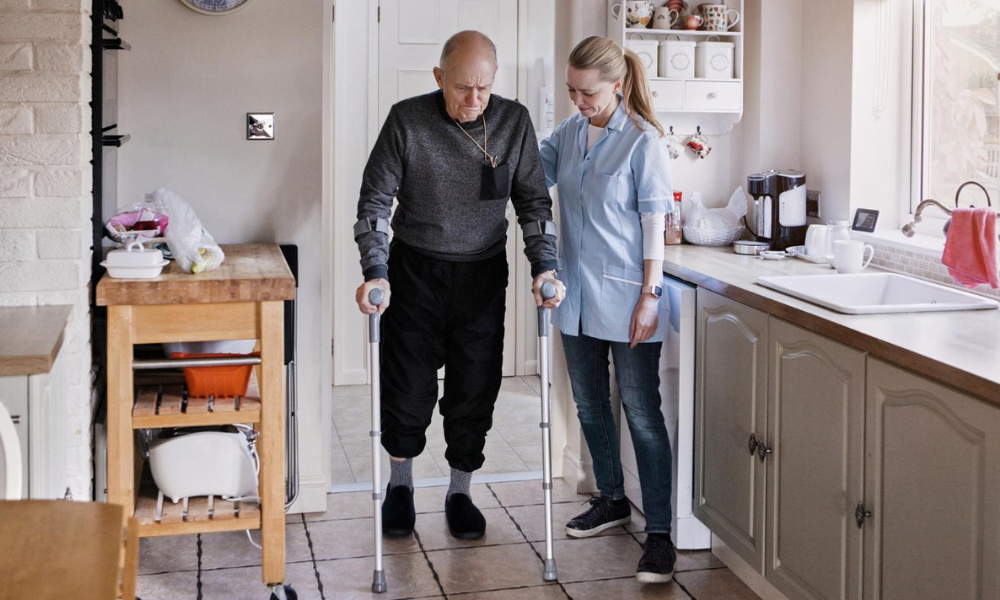
Many homes in Ohio were built with narrower doorways and hallways, which can make it difficult to move mobility devices such as wheelchairs or walkers through the home.
Widening these areas or simply clearing more usable space can improve movement and accessibility throughout the house.
Here’s what you should check for in tighter spaces:
- Doorway openings that are too narrow for a walker or wheelchair
- Hallway corners that don’t leave enough room for turning
- Raised thresholds between rooms that can catch a wheel or foot
- Furniture placed too close to primary walking paths
A little extra clearance throughout the home, along with the right mobility solutions and other medical supplies, can make daily movement much easier.
Upgrading Lighting Throughout the Home
Ohio’s shorter winter days make reliable indoor and outdoor lighting especially important, particularly around stairways, entrances, and frequently used pathways.
Better lighting can make it easier to see changes in flooring, steps, and obstacles that may otherwise be easy to miss.
Some simple lighting upgrades may include:
- Light switches placed at both ends of longer hallways
- Nightlights along hallways and inside bathrooms for nighttime trips
- Brighter bulbs in primary living areas used for daily activities
- Motion-sensor lighting near entryways and staircases
Lighting is also one of the simpler home updates to address when preparing to age in place.
Stair Lift Installation for Multi-Level Access
A stair lift installation can help someone continue using multiple levels of the home while riding safely in a seated position.
For someone who has increasing difficulty managing stairs, a stair lift may reduce the physical demands of moving between floors and help preserve access to more of the home.
How a stair lift can help someone age in place:
- Many stair lifts have rechargeable batteries that allow limited use during a power outage
- Controlled travel designed around the staircase and lift model
- A swivel seat can make getting on and off easier for someone with limited mobility
- Weight capacities vary by model to support different users
For a multi-level home, a stair lift may be an important option when stairs have become one of the biggest barriers to daily mobility.
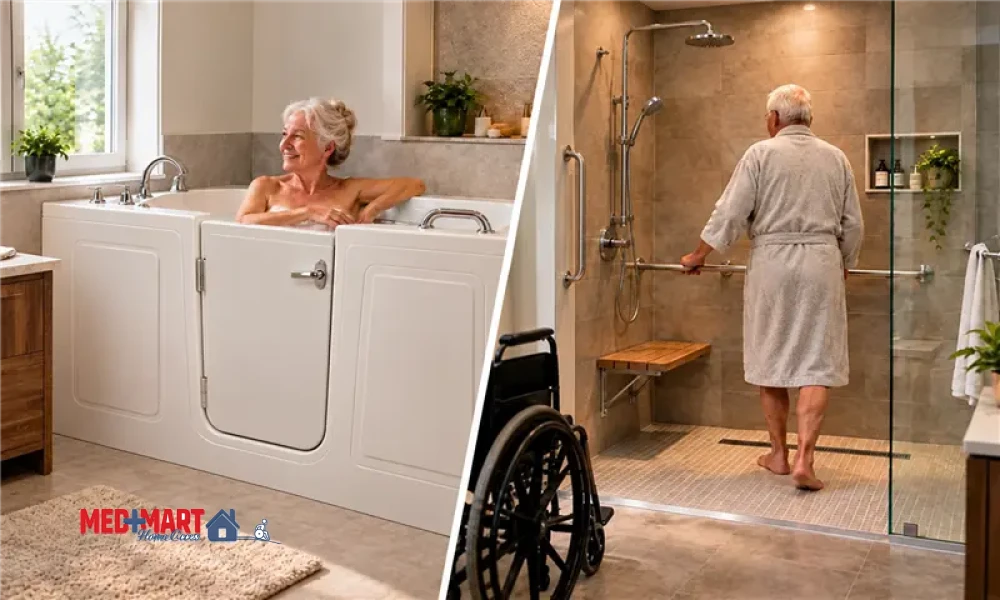
Walk-in Tub Installation for Safer Bathing
A professional walk-in tub installation can replace the high step-over wall of a traditional bathtub with a lower entry door.
That can make bathing easier for someone who has difficulty stepping over a standard tub wall. Many models also include built-in seating and optional comfort features.
Features commonly found in a walk-in tub include:
- A lower watertight door instead of a taller tub wall
- A built-in seat for seated bathing
- Slip-resistant flooring
- Optional jets for added comfort while soaking
Bathing can feel much more manageable once a major physical barrier is reduced.
Wheelchair Shower Installation for Roll-In Bathing Access
A properly designed wheelchair shower installation can provide a curbless or roll-in entry for wheelchair users and may also create more room for caregiver assistance.
When planned correctly for the space, this type of shower can reduce barriers and make bathing easier for someone using a wheelchair or walker.
What a wheelchair shower installation may include:
- A curbless or roll-in entry
- Slip-resistant flooring designed for wet conditions
- A handheld showerhead that can be adjusted for seated use
- Grab bars placed where they provide the most useful support
The exact layout should be based on the user’s mobility needs and the space available in the bathroom.
Wheelchair Ramps Installation for Entryways and Porches
A wheelchair ramp installation can provide an alternative to steps at garages, porches, and other home entry points.
For someone using a wheelchair, walker, or scooter, a properly designed ramp can make entering and leaving the home much easier.
Here’s how a wheelchair ramp installation can help:
- Slip-resistant surfaces and proper drainage can improve traction
- Handrails can provide additional support
- A properly designed slope can make movement easier
- Modular systems may be adjusted if needs change over time
Ramp installations can be an effective way to address an entryway that has become difficult to navigate.
Ohio’s PASSPORT Medicaid waiver program may also help eligible older adults pay for certain approved home modifications, including accessibility improvements, when program requirements are met.
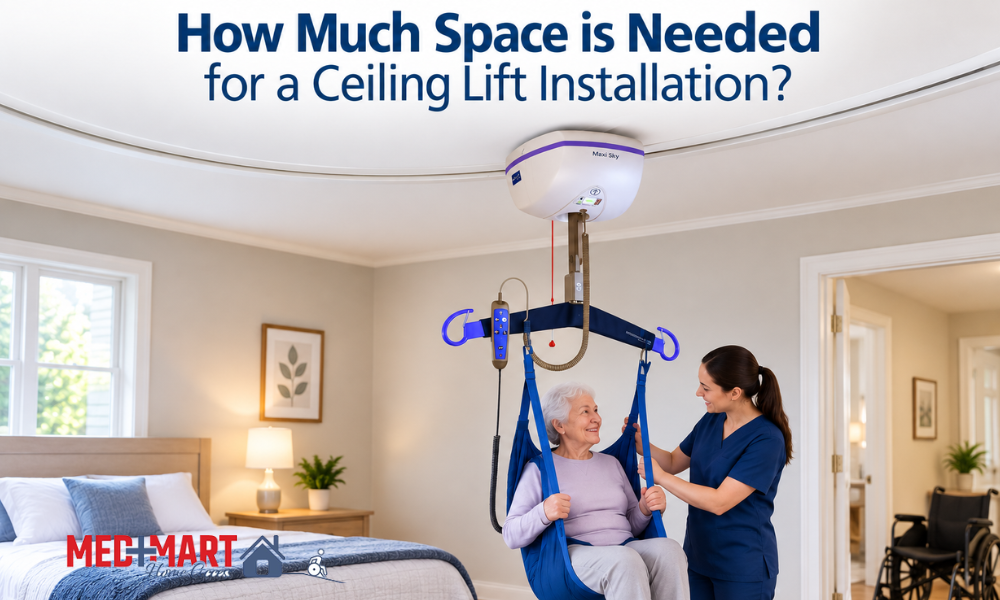
Ceiling Lifts and Hoists Installation for Bedroom & Bathroom Transfers
A ceiling lift installation can help transfer a person between a bed, chair, bathroom, or other areas using an overhead track system.
For households where transfers require a high level of physical assistance, a ceiling lift can reduce how much manual lifting the caregiver needs to perform.
What a ceiling lift installation can support:
- A track system connecting important areas such as bedrooms and bathrooms
- A motorized lift that reduces the amount of physical lifting required
- More controlled transfers in higher-care situations
- Track configurations that can be customized for room layouts and ceiling structures
For households managing more advanced care needs, a ceiling lift may be worth considering as part of a broader transfer plan.
Planning for Power Outages
Storms and winter weather in Ohio can sometimes cause extended power outages. That can become a serious concern for anyone who relies on powered medical or mobility equipment.
Having a backup plan can make it easier to continue using essential equipment safely when the power goes out.
A backup plan may include:
- Checking whether essential mobility equipment has battery backup and how long it can operate
- Keeping backup batteries charged where applicable
- Considering a generator for longer outages, with proper sizing, installation, ventilation, and operation based on manufacturer and safety guidelines
- Keeping a medical alert device fully charged
- Having a plan for medications that require refrigeration
The important part is understanding in advance which equipment depends on electricity and what the backup option is for each device.

Every Ohio Home Gets Its Own Custom Plan at Med Mart Home
Homes in Ohio come with different layouts, staircases, entryways, and accessibility challenges. That’s why a one-size-fits-all approach rarely works.
At Med Mart Home, our experts inspect the space and help match each installation to the home’s layout and the person’s daily routine.
Here’s how our process works:
- A free in-home consultation to evaluate the space
- Certified technicians who manage the complete setup
- Ongoing repair and maintenance support once work is done
- Financing options to help spread out costs
Contact us today to schedule an in-home visit and start putting together an aging-in-place plan for your Ohio home.
A Safer Future Starts With a Few Thoughtful Steps
Every home and family timeline is different. No single plan works for everyone. Some households may only need one small change right now, while others may want to plan several updates at once.
A good place to start is with the areas used most often every day. Look at the main entrance, bathroom, stairs, bedroom, and the routes between them. Ask where movement has become difficult or where someone already needs extra help. From there, improvements can be prioritized based on the biggest barriers rather than trying to change everything at once.
What matters most is preparing gradually and making thoughtful changes that support the way someone actually lives in the home.
Frequently Asked Questions
Will these changes affect my home's resale value?
They can, but the impact depends on the type of modification, the quality of the work, the home, and the future buyer.
Some accessibility improvements, such as better lighting, wider pathways, attractive curbless showers, and well-designed entry changes, may appeal to buyers who value convenience or accessible living.
More specialized modifications may appeal to a smaller group of buyers, so resale value is best considered alongside the immediate benefit the modification provides to the person living in the home.
Can I make these changes myself instead of hiring a professional?
Some smaller improvements, such as lighting changes or rearranging furniture to create clearer pathways, may be reasonable do-it-yourself projects.
Structural changes, electrical work, plumbing, ramps, stair lifts, ceiling lifts, and other installed accessibility equipment should generally be handled by qualified professionals who understand the product and installation requirements.
How long does it typically take to prepare a home for aging in place fully?
There isn’t one standard timeline.
Many families make changes in stages as needs develop, while others complete several improvements as part of a larger remodeling project.
The timeline depends on the condition of the home, the modifications needed, permitting or construction requirements, and how quickly the household wants to complete the work.
What should I prioritize first if my budget is limited?
Start with the areas that create the biggest daily barrier or safety concern.
For many people, that may mean improving lighting, addressing difficult bathroom access, reducing tripping hazards, or making the main entrance easier to use.
The right priority depends on the person’s routine and where they’re currently having the most difficulty.
Can renters make these kinds of home modifications?
Possibly, but renters should check with their landlord before making permanent changes to the property.
Smaller non-structural changes, such as improved lighting or rearranging furniture to create clearer pathways, may be easier to make without altering the home.
Anything that involves permanent installation, drilling, plumbing, electrical work, or structural modification should be discussed with the property owner first.