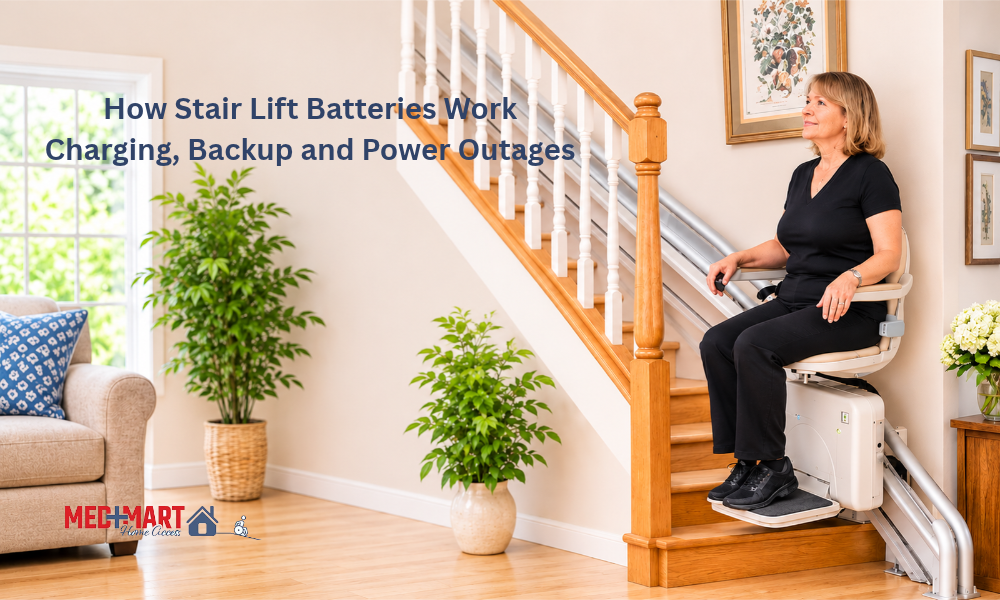
Stairs that once felt easy can gradually become a daily struggle after surgery, injury, or age, making them even harder to climb. Some people begin limiting how often they use the second floor when stairs become difficult or uncomfortable. A stair lift can provide seated access between floors when climbing the stairs has become difficult. So, before you choose a stair lift, it’s important to understand which type fits your staircase’s shape. A bit of expert guidance can make this choice easier.
Med Mart Home provides a range of home mobility solutions, including equipment installation, rentals, and repairs. Our team can help you assess your staircase, understand the available options, and choose a stair lift that suits your home. Our team can support you from the initial staircase assessment through installation, service, and ongoing maintenance. To make your choice easier, we will explain the two main types.
Why Choosing the Right Stair Lift Type Takes Time
According to recent reports from the National Safety Council, 43,020 adults aged 65 and older have died from preventable falls. They further note that falls mainly happen on floors, steps, stairs, and beds. Because a stair lift may become part of the home for years, it’s worth taking the time to choose the right equipment and rail for the staircase.
A wrong choice may lead to challenges such as:
- A straight stair lift cannot follow a staircase that changes direction.
- A curved stair lift requires a custom rail and additional planning.
- Choosing the wrong type can lead to unnecessary costs and installation delays.
- Poor installation or an unsuitable model can affect everyday use and safety.
So, choosing professional stair lift installation generally starts with an in-home assessment so the staircase can be measured and the available options reviewed. That visit can help you decide whether your home needs a straight or curved stair lift.
What Are Straight Stair Lifts?
A straight stair lift is suitable for a single straight flight of stairs. If the staircase changes direction or has a turn that the rail needs to follow, a curved stair lift may be required. The seat swivels at the top so you can step onto the floor instead of toward the stairs.
What Are Curved Stair Lifts?
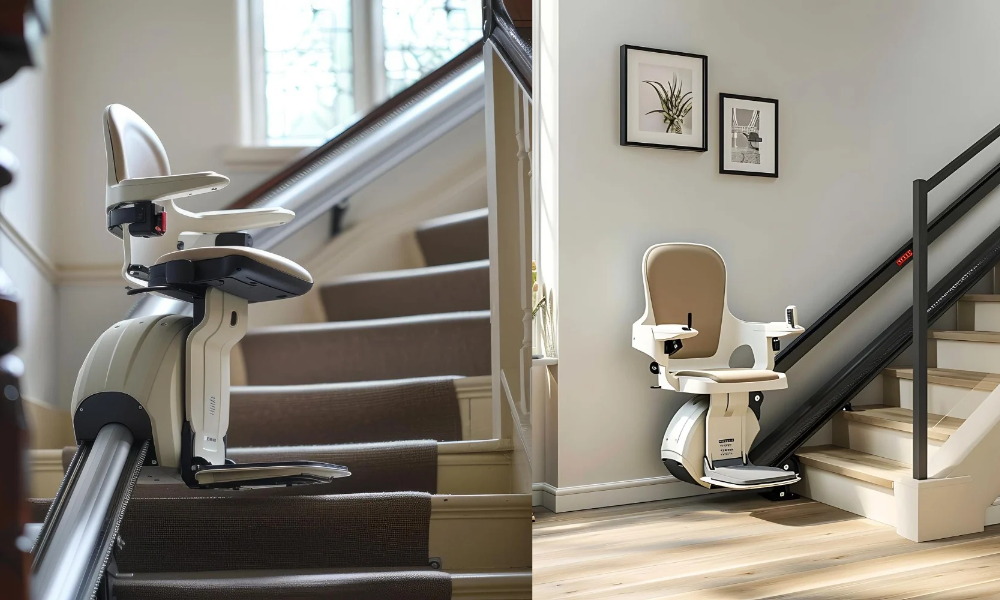
A curved stair lift runs on a custom-made rail that matches your existing staircase. The rail is designed to follow the turns and landings that are part of the lift’s travel path. A stair lift installer will measure every bend in your home and build a rail from those measurements. Once installed, the lift carries the rider along the custom rail through the staircase’s turns. The Handicare 2000 curved stair lift is one option for homes with curved staircases. Its custom rail is designed to follow the turns and landings of the stairs.
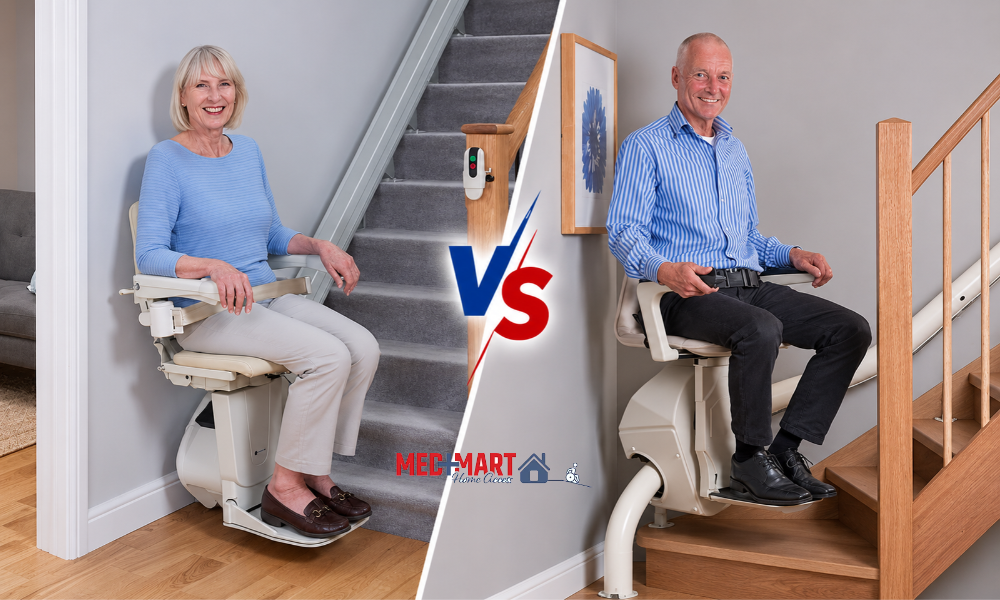
How Straight and Curved Stair Lifts Compare Side by Side
These factors set the two types apart, and each one can change which lift suits your home best:
Staircase Layout and Rail Shape
Your staircase shape comes first. It decides which rail can run along the steps the seat will travel.
Straight Stair Lifts
A straight stair lift follows one unbroken line from the bottom step to the top. It suits stairs with no turns, bends, or landings.
Layout Benefits of Straight Stair Lifts
- Fits one straight run of stairs
- Needs no custom rail for turns
- Follows a simple path from bottom to top
- Seat swivels at the top for a safe exit
Curved Stair Lifts
A curved stair lift runs on a rail built around your exact staircase, including each bend and landing. It suits stairs that turn, split into sections, or change direction partway up.
Layout Benefits of Curved Stair Lifts
- Matches staircases where a straight stair lift cannot be installed
- Works well on stairs that straight stair lifts cannot handle
- A better option where straight lifts cannot fit
- Ideal for staircases with sharp turns or bends
A straight lift usually works when the rail can follow one continuous straight flight. If the rail needs to travel around a turn, bend, or intermediate landing, a curved lift may be needed.
Purchase Price and Long-Term Cost
Prices differ significantly between the two types. A custom rail adds cost, while a standard rail keeps it lower.
Straight Stair Lifts
Straight stair lifts generally cost less than curved models because they use a standard rail rather than one made specifically for the staircase. Pre-owned and rental options may also be available for certain straight stair lifts.
Cost Benefits of Straight Stair Lifts
- Lower price than a custom curved rail
- Pre-owned options may be available
- Rentals can cover a short recovery
- Savings can go toward other home safety changes
Curved Stair Lifts
Curved stair lifts typically cost more because the rail must be designed and manufactured for the individual staircase. The price reflects the custom design and longer build time for each rail.
Cost Benefits of Curved Stair Lifts
- Covers a staircase a straight lift cannot
- Provides access across staircases where a straight stair lift is not suitable
- Suits long-term use in a home you plan to keep
- Keeps upper floors open without a move
A straight lift is generally the lower-cost option when the staircase allows for one. If the rail needs to follow turns, bends, or certain landings, a curved system may be necessary.
Wait Time and Installation Day
Timing matters most when you need stair access soon after surgery or injury. The two types follow very different schedules.
Straight Stair Lifts
Because straight stair lifts use a standard rail, installation can often be scheduled relatively quickly depending on equipment and technician availability. Many installations can be completed in a single visit.
Installation Benefits of Straight Stair Lifts
- Often installed within the week you order
- Finished in a few hours
- Helps when a hospital discharge is near
- Needs little planning ahead
Curved Stair Lifts
Curved stair lifts require a custom rail, so installation may take several weeks after measurements are completed. The work itself takes just one day once the rail arrives.
Installation Benefits of Curved Stair Lifts
- Installed in one day once the rail arrives
- Rail built from measurements taken at your home
- Weeks of lead time to prepare the staircase
- A finished fit with no gaps along the turns
A straight stair lift can often be installed more quickly because it uses a standard rail. A curved lift takes additional planning and fabrication because the rail is built for the individual staircase.
Weight Capacity and Rider Size
Every stair lift has a weight limit set by the maker. Check it against the rider before you choose a type.
Straight Stair Lifts
Straight stair lifts are available in a range of weight capacities, including higher-capacity models for users who need additional support. The exact limit depends on the lift. Tell your installer the rider’s exact weight before you choose a model.
Capacity Benefits of Straight Stair Lifts
- Standard models hold 300 to 350 pounds
- Heavy-duty models reach 600 pounds
- Weight limits are clear before you order
- Installer confirms the match at the assessment
Curved Stair Lifts
Weight capacities vary among curved stair lift models, just as they do with straight lifts. Your installer confirms the exact limit for the model that fits your staircase and rider.
Capacity Benefits of Curved Stair Lifts
- Standard capacity is almost the same as the straight stair lifts
- Available in different weight capacities depending on the model
- Limits are confirmed during a complete home evaluation
- Rider remains seated, steady, and belted across each turn
Weight capacity alone usually won’t determine whether you need a straight or curved stair lift. Capacity varies by model, so confirm the exact limit and recommended fit during your home assessment.
Space and Daily Use
Think about how the lift fits into your home each day. Doors, walkways, and people on the stairs all matter.
Straight Stair Lifts
A straight stair lift rail sits right along the steps, and a remote lets you call or send the seat to either end. Keep the steps clear of any loose items.
Daily Use Benefits of Straight Stair Lifts
- Remote lets you call or send the seat
- Seat can wait at either end of the stairs
- Rail bolts to the steps, so walls stay clear
- Simple controls make it easy to learn
Curved Stair Lifts
The Handicare 2000 Curved folds up when no one is riding it. An optional powered hinge keeps the track from blocking doorways and walkways at the bottom of the stairs.
Daily Use Benefits of Curved Stair Lifts
- Folds up when no one is riding
- Optional powered hinge clears the walkway
- Suits indoor and outdoor staircases
- Folded seat leaves more room to walk past
Both straight and curved stair lifts may offer call/send controls, depending on the model. Features such as folding seats and powered hinges can also help keep walkways clearer when the lift isn’t being used.
Which Stair Lift Type Is Right for Your Home?
Neither type wins every time. The better choice depends on your staircase, how soon you need the lift, and how long you expect to use it.

A straight stair lift may be a good fit if you:
- Have stairs that run in one straight line
- Need the lift soon after a hospital stay
- Want to keep the cost lower
- May only need the lift temporarily, depending on available rental options
A curved stair lift may be a good fit if you:
- Have stairs with a turn, a bend, or a landing
- Plan to stay in their own home for years
- Can wait a few weeks for a custom rail
- Need the lift to reach the whole staircase
Take Your Time With This Decision
A stair lift should make each day easier, so decide at your own pace. Ask questions, and talk with the people who will use the lift. If you can, bring a family member or caregiver to the assessment. A second set of ears helps when the technician explains the options and the price.
At Med Mart Home, we provide professional installation of straight and curved stair lifts, with factory-trained technicians and a free in-home estimate. Contact us today to schedule your estimate and find the stair lift that fits your home.
Frequently Asked Questions
Can a straight stair lift be changed into a curved one later?
No. A straight stair lift rail is designed for a straight staircase and cannot simply be modified to follow a curve. If you move to a home with a different staircase layout, you will need to have the new staircase assessed to determine the right rail and equipment.
Does Medicare pay for a stair lift?
Original Medicare generally does not cover stair lifts because they are considered home modifications rather than durable medical equipment. Some Medicare Advantage plans or Medicaid waiver programs may offer assistance, depending on the plan, eligibility requirements, and program rules. Check directly with your plan or local program to understand your options.
Can I rent a stair lift while I recover from surgery?
Yes. Med Mart Home rents stair lifts for short-term needs, and you can apply rental payments toward a purchase if you decide to keep the lift.
Can I use a stair lift if I use a wheelchair?
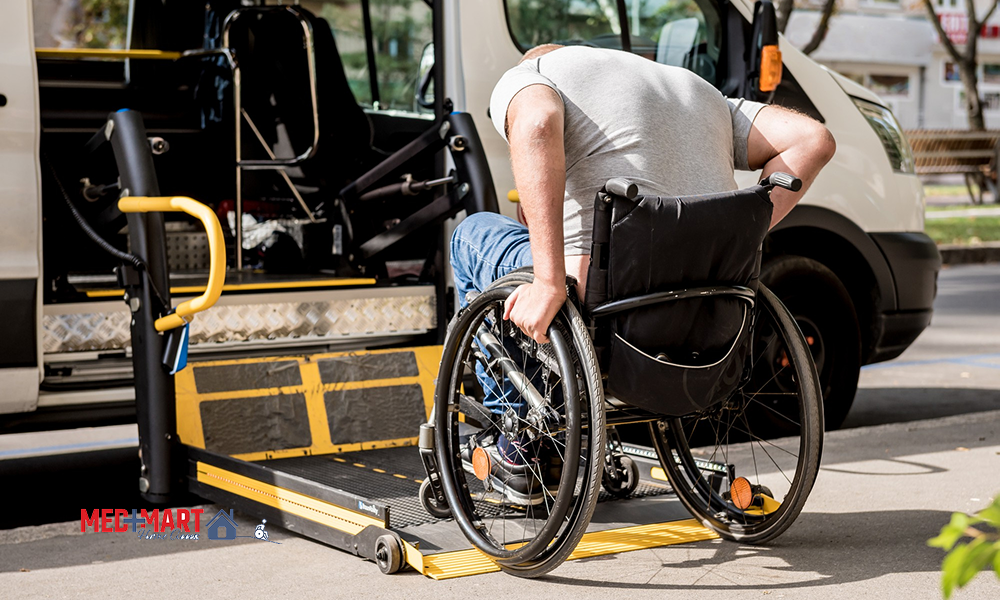
Some wheelchair users may be able to use a stair lift if they can transfer safely between the wheelchair and stair lift seat, either independently or with appropriate assistance. Because a standard stair lift carries the person rather than the wheelchair, the wheelchair would remain on one floor unless another mobility device is available at the other end. If transferring is not possible or practical, a residential elevator or another accessibility solution may be worth considering.
What happens to a stair lift during a power outage?
Stair lifts run on rechargeable batteries that charge from a household outlet. A battery-powered stair lift can continue operating during an outage as long as there is enough stored charge remaining. How long it will operate depends on the model, battery condition, and how much charge was available when the power went out.