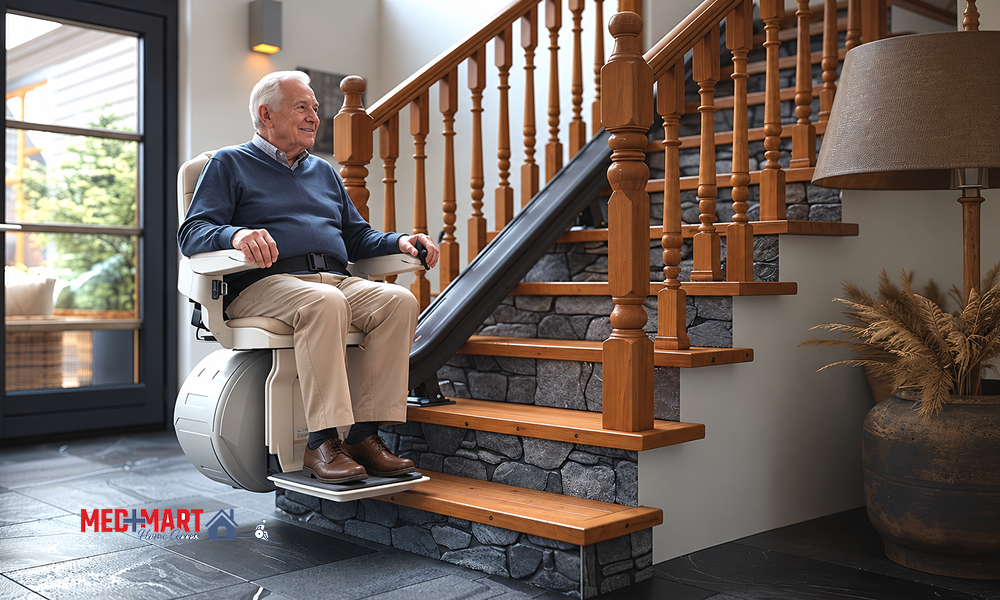
For most individuals, especially seniors, people with mobility challenges, or those recovering from recent surgery, climbing stairs can look a bit intimidating. Whatever the reason, feeling uncertain about using stairs in your own home is more common than people realize. A stairlift is a medical mobility device that’s built to take that uncertainty away.
That trust starts with knowing exactly how a stairlift can keep you safe, step by step. At Med Mart Home, we understand that and have spent years helping families find the right home mobility solutions to meet their needs. Once you learn about the safety features built into a stairlift, you’ll naturally trust this device.
The Standards That Keep Every Stairlift Ride Safe
Stairs are one of the most common places where falls happen, and that risk tends to increase with age or limited mobility. A stairlift built to reduce that risk replaces climbing stairs with a seated, more controlled ride from top to bottom.
Based on recent injury tracking data from the National Safety Council, stairs, ramps, and landings are the leading causes of home injuries. Furthermore, older adults aged 65 or more face some of the highest injury rates under this category.
Here’s why it’s important to check the safety features of a stairlift:
- Each part gets technically and thoroughly tested
- Weight limits prevent risks of overloading
- Speed remains steady and under the user’s control
- Safety sensors are included in this device
- Professional installers follow strict installation guidelines
These features are designed to help reduce common risks associated with stairlift use, while proper installation ensures the equipment is operated as intended. This shows that every unit is built, tested, and assembled to documented national standards before it carries a rider. These small details are why choosing professional services for stairlift equipment installation matters.
Common Safety Features Built Into Every Stairlift
Here are some of the most common safety features found in modern stairlifts, and homeowners need to know about them.
Seatbelt and Secure Harness
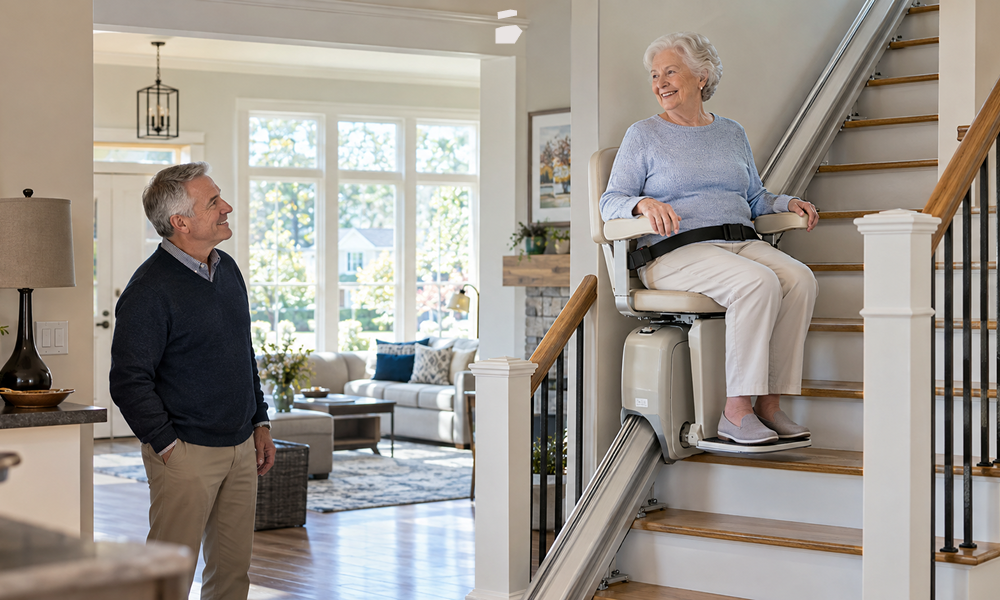
Stairlifts come equipped with a seatbelt that’s designed to keep a rider firmly in place throughout the ride. Some models include interlocks that prevent operation until the seatbelt is buckled properly, which removes a user’s temptation to skip it entirely.
What this feature protects against:
- Shifting position during the ride
- Any sudden stop or start
- Riders who forget to buckle up the seatbelt
- Sudden falls due to an unsecured seat
With all these protections in place, the seatbelt is one of the most effective safety features on any stairlift. It works in the background on every trip a user takes up or down the stairs.
Swivel Seat Lock
Many stairlifts feature a swivel seat that helps users turn towards the landing when getting on or off. This feature makes it easier and safer to get on and off the edge of the steps. Additionally, a locking mechanism prevents the seat from rotating again until it’s safely back in position.
Why the lock mechanism matters:
- Prevents the seat from rotating mid-ride
- Keeps the exits away from stairs
- Stops any movement until the stairlift is properly locked
- Reduces any awkward or twisting transfers
These critical details work with other features, making getting on and off the stairlift one of the safest parts of the ride, not a safety risk.
Obstruction Sensors
Stairlifts have sensors placed along the carriage and footrest that detect anything blocking the track before the stairlift moves. If something gets in the way, such as a pet, stray shoe, or a toy, the unit stops moving and will not proceed.
What these obstruction sensors detect:
- Clutter or toys on the stairs
- Pets who cross the track
- Debris or loose rugs
- Anything that blocks a smooth path
This automatic detection means the stairlift can respond to real conditions on the stairs instead of assuming the path is always clear.
Automatic Speed Controller
These mobility devices have a built-in speed controller that maintains a slow, consistent speed regardless of the incline or the rider’s weight. The stairlift is designed to maintain a controlled speed, helping prevent sudden acceleration during operation.
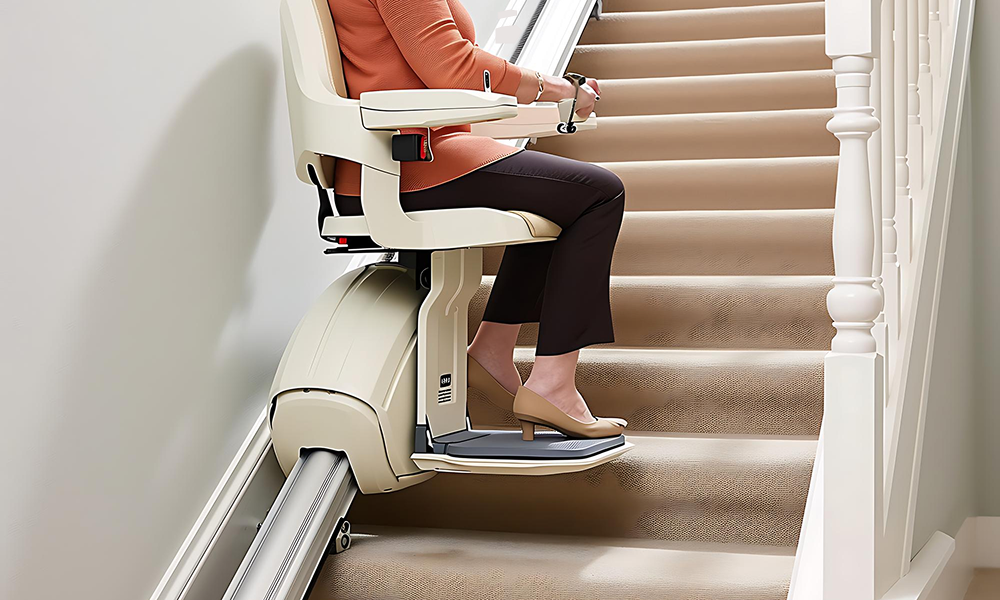
Why a controlled speed matters:
- A steadier speed across staircases of all types
- No sudden surges or jolts
- Consistent control across curves
- Predictable motion that riders can trust
A controlled, steady pace such as this can turn first-time nervousness into daily comfort in just a couple of rides.
Battery Backup Power
Most stairlifts run on rechargeable batteries instead of relying solely on household power. A properly charged battery provides continued operation during many power outages, helping reduce the risk of being stranded on the stairs. The device continues to work using its stored charge.
What battery backup provides:
- Ongoing use even after power outages
- No risk of being stranded mid-ride
- Consistent charging in between rides
- Reliable operation in any weather conditions
This built-in backup means the stairlift continues to work when it’s needed most, not just on days when everything else operates smoothly. It’s the same type of reliability people look for when choosing medical supplies beyond mobility equipment for daily home use.
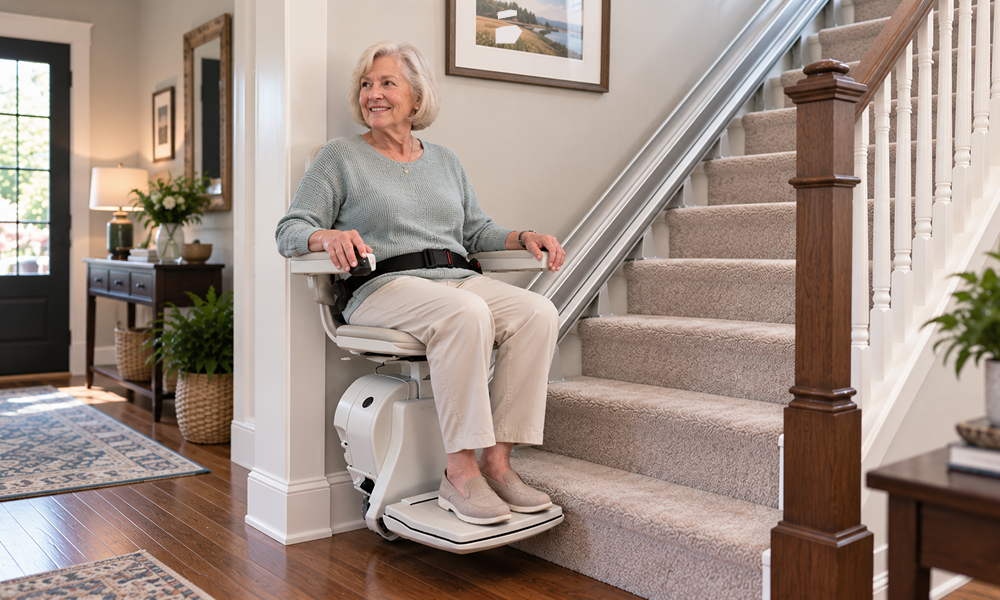
Emergency Stop Button
An easy-to-reach stop button allows the rider to stop the stairlift immediately at any point during the ride. The button is within arm’s reach as it’s located in the armrest, so no more reaching further or searching is required.
Why quick access matters:
- Immediate control throughout the ride
- No searching for any hard-to-find controls
- Works across any point on the track
- Easy to use even under stress
This kind of immediate control, within arm’s reach, gives most riders the confidence to use their stairlift without
depending on a caregiver’s assistance.
Footrest Safety Sensor
Depending on the model, footrest sensors can detect obstruction or unsafe conditions and stop the lift from
operating. This helps prevent the unit from operating if the footrest gets caught or is positioned improperly.
What this sensor prevents:
- Unsafe movement even with the footrest raised
- Catching on landings or stairs
- Improper foot positioning during the ride
- Starting before the rider is ready
This final safety check happens automatically before every ride. This adds another layer of protection that a rider
never has to think about or manage.
Med Mart Home Knows What Actual Safety Requires
Understanding stairlift safety features is only one part of the equation. Proper installation is the other part of the equation, since even a well-designed stairlift relies on correct setup and fitting. That’s what Med Mart Home has clearly understood, backed by over two decades of experience, and families rely on us before choosing a model to install.
Contact us today to schedule a free in-home consultation and explore all the features for yourself!
Take the Uncertainty Out of Your Next Step
The decision to install a stairlift is rarely made for convenience alone. It’s about the confidence of being steady and secure in a part of the home that has become less so.
Families come to that decision in different ways, whether it’s after a fall, a diagnosis, or simply feeling more cautious on the stairs. With knowledgeable people and accurate information, you can find a safer, more comfortable way to move between floors again.
Frequently Asked Questions
How long will a stairlift last?
With regular maintenance, most stairlifts typically function properly for 10 to 15 years. Usage and model quality can alter that range.
Can a stairlift be fitted to a narrow staircase?
In many cases, yes. Professional installers first assess the staircase to choose a model built to handle its angle and width safely.
Do stairlifts require a lot of upkeep?
An annual inspection can detect excessive wear before it becomes a major issue.
Are stairlifts safe for curved stairs?
Yes. Curved stairlifts use custom-made rails designed to follow the shape of the staircase. Like straight stairlifts, they include safety features designed to support secure and controlled operation.
Is it difficult to learn how to use a stairlift?
Most people find operating a stairlift easy and intuitive, as manufacturers design them to be.