Transferring a loved one safely from a bed to a wheelchair or from a chair to the bathroom is one of the most physically demanding parts of caregiving. When done incorrectly day after day, these transfers can strain a caregiver’s back and shoulders while also taking a toll on their patience.
Choosing the right type of patient lift can change the entire experience. These devices help turn stressful, multi-person transfers into confident, controlled movements. Patients experience greater comfort, maintain their dignity, and enjoy improved mobility, while caregivers can reduce the risk of burnout. Therefore, choosing between a ceiling lift and a portable lift is often the most challenging decision, as the right choice depends on what best fits your home, needs, and daily routine.
Making that decision actually starts by understanding how each system can help, and this is where Med Mart Home steps in. As a well-recognized medical supply and equipment provider, we have been helping families with professional ceiling lift and hoist installation in Cincinnati, OH, as well as rental and repair options that make everyday care safer.
So, let’s now compare both lift types to help you choose confidently and regain freedom to move around with ease.
- Ceiling lift installation offers fixed tracks, hands-free use, and less caregiver effort
- Portable lifts offer wheeled bases without any installation required and ease of movement between rooms
- Ceiling lifts cost more upfront, reducing long-term caregiver strain
- Portable lifts cost less and transport seamlessly but need manual steering
- Both enhance transfer safety and reduce fall risks compared to manual lifting
Ceiling Lift vs. Portable Patient Lift: Why Type Matters
The type of patient lift you choose will affect your entire household, from daily comfort to long-term cost, safety, and how well the system aligns with an existing home. According to Grand View Research, proper care for patients at home is the main section that highlights the necessity of patient lift adoption. This supports families who choose to provide care to their loved ones at home rather than in clinical settings.
Choosing the right type of lift depends on:
- Amount of daily physical effort that’s involved
- Rooms that get covered during transfers
- Upfront costs and convenience
- Required floor space
- Flexibility as care needs shift
Therefore, considering these aspects sooner can provide safety and comfort. Professional guidance on medical supplies and installations can also make every decision easier.
A Closer Look at Each Lift Option
Both lift categories can resolve different types of caregiving challenges. So a clear insight into how each one
operates can make comparisons easier.
Ceiling Lift Overview
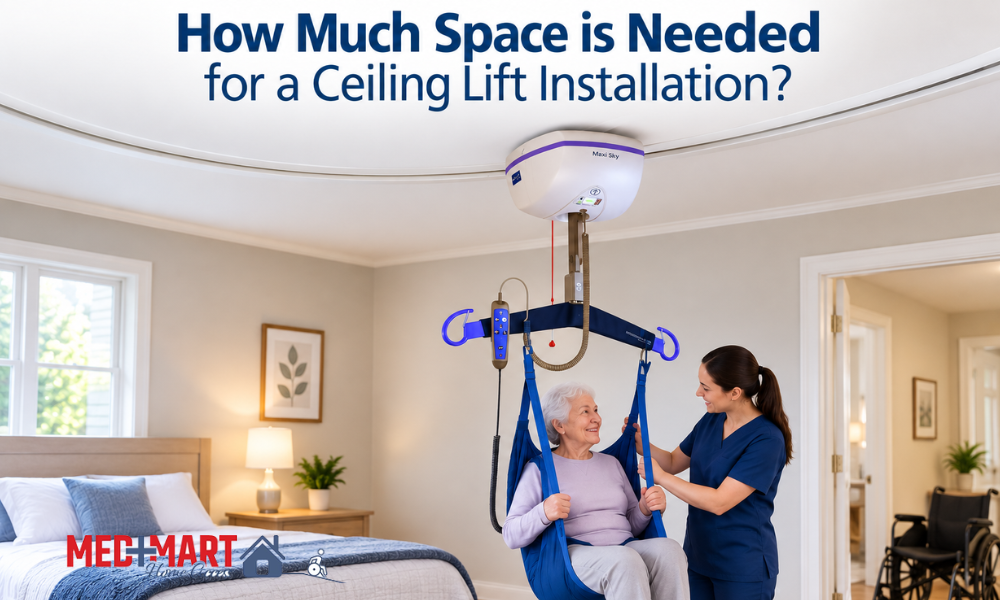
A ceiling lift operates on a track mounted overhead, either along a single path or across an X-Y grid that covers the entire room. A motorized unit glides along the track, lifting patients with a sling and transferring them smoothly from one location to another.
This highlights the importance of a professional ceiling lift installation, as the track should match the ceiling structure and the patient’s actual movement path to work safely for several years.
Portable Patient Lift Overview
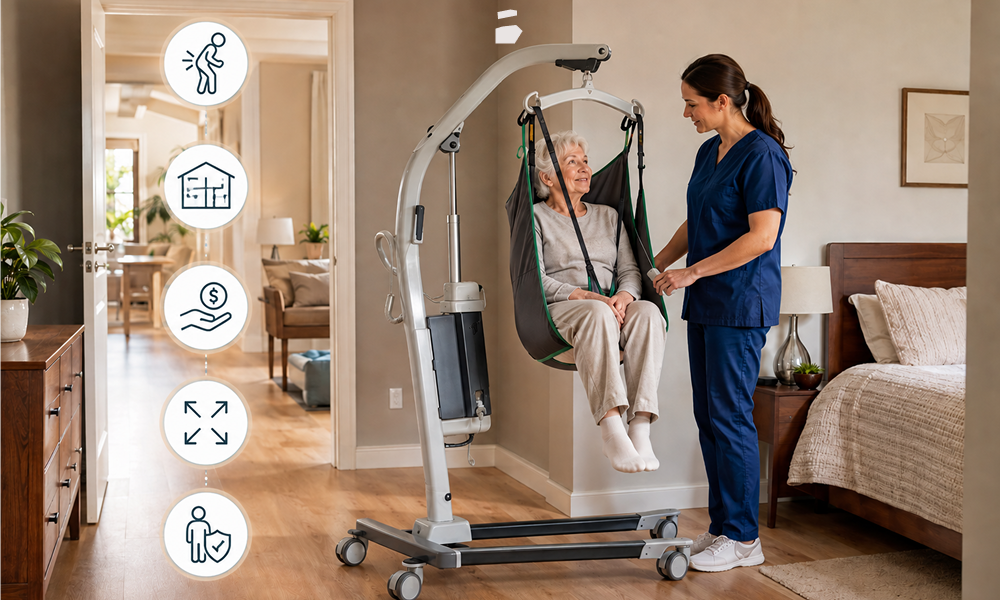
A portable patient lift is a freestanding wheeled unit that helps caregivers roll it into position wherever required. It works through a manual hydraulic pump or a battery-powered motor to raise or lower the sling.
There’s no permanent mounting involved. Professional assembly of this medical mobility device, setup, and user training ensure the lift is adjusted correctly and used safely right from day one.
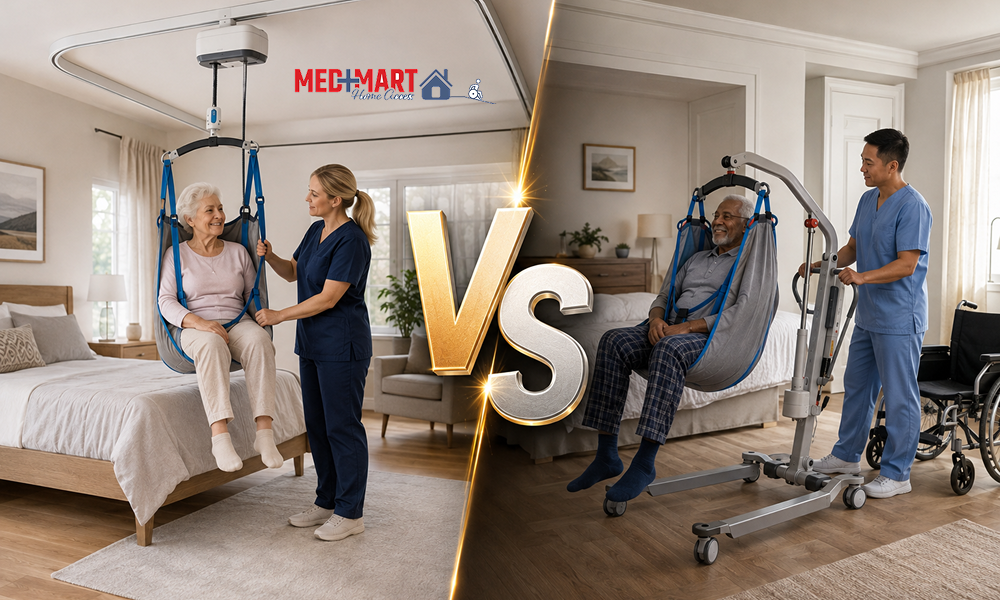
A Side-by-Side Snapshot of Both Lifts
So, here’s how both options compare when their daily features are put into real-lift use.
| Composition | Ceiling Lift | Portable Patient Lift |
|---|---|---|
| Set Up | Tracks should only be installed by professionals as required | Minimal assembly required; no permanent installation |
| Weight Load Capacity | Typically supports 300–500 lbs., with bariatric models supporting higher capacities | A maximum load of approximately 400 lbs. A bariatric model tips the scales at 700 lbs |
| Cost Involved | The cost after setup is approximately $5,000+ post-setup expenses | Can be around $1,000 to $3,000 |
| Needed Space | No floor space required; overhead track system | Requires floor space for safe positioning and movement |
| Caregiver’s Assistance | Minimal physical effort after installation, except for good mechanical drives | Requires manual positioning before each transfer |
| Power Source | A rechargeable battery that is motorized | Manually operated by either hydraulic or battery |
| Transportability | Stable, immobile | Transfers are a regular challenge between rooms |
| Ideal Use Case | Families coping with multiple transfers of patients | Families living with transfers in multiple rooms |
With that in mind, let’s take a closer look at the specific examples of these two types before comparing them in detail. This will help ensure you choose the option that best matches your lifestyle and needs.
Seamless Transfer and Caregiver Effort
The differences lie in the smoothness of the transfer process and the physical effort required for the caregiver to pull off the transfer.
Ceiling Lift
A ceiling lift is a lift that is attached to the ceiling and runs along a fixed track. This kind of motion enables a person to move with a controlled motion that requires almost no involvement from the caregiver. The design provides:
- Movement controlled, not too much rocking or throwing
- Reduces physical stress on caregiver’s back and shoulders
- Improved support for a transfer occurring over several days
Portable Patient Lift
To use a portable patient lift, you will require the skill of the caregiver to guide, position, and stabilize the unit manually. This brings in a little more physical engagement with each transfer. The process offers:
- Improved support for safe and directed transfers
- Adjustability of position to suit changing requirements
- Good alternative if no fixed track available
Space and Home Layout
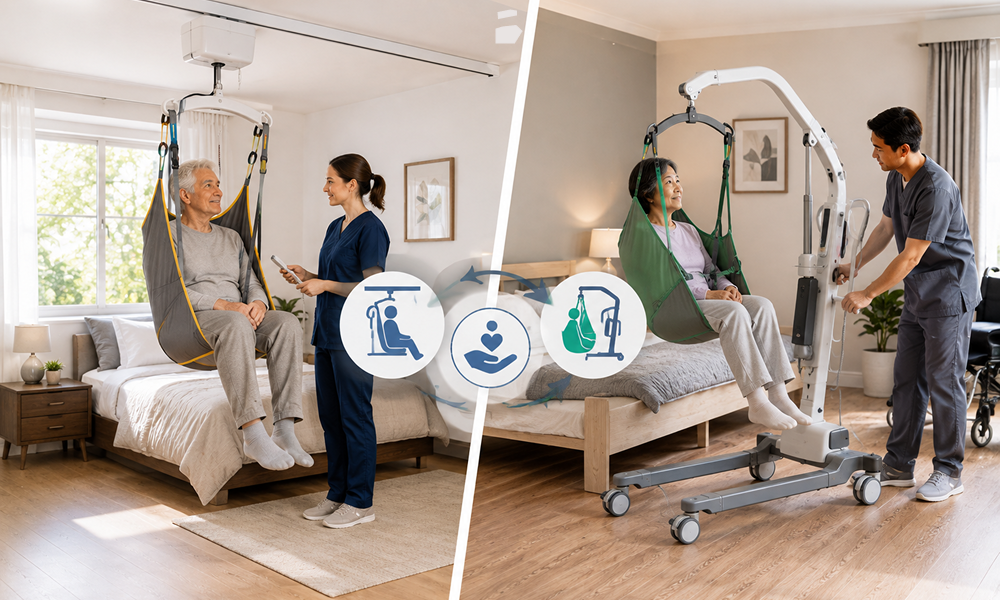
The space needed for a lift and the space in an existing room can influence your choice.
Ceiling Lift
A ceiling lift is a mechanism built into the ceiling, allowing the floor to remain free. They also help make everyday life in small or busy rooms more free and easy. The design is effective for use in:
- Bedrooms or bathrooms with minimal square footage
- Homes with open walking lines of sight for safety
- Most frequently used rooms with high footfall
Portable Patient Lift
A portable lift will take up floor space and require a space to walk to and from the bed to the chair or to the bathroom in the house. A solution is suitable for a larger footprint:
- Sufficient open space for bedrooms and bathrooms
- Transferring homes in multiple rooms often
- Open areas with no desired permanent ceiling mounting options
Installation and Setup
Installing a lift for daily use looks very different based on the type of system a home chooses.
Ceiling Lift
A ceiling lift will need a professional installation that includes a structural assessment and securely mounting the tracks before it’s ready to use. The setup process involves:
- An in-home assessment confirms structural support
- Professional mounting of the track and motor system
- A one-time installation supports years of regular use
Portable Patient Lift
These lifts arrive ready to use and need no structural changes, professional installation, or waiting periods before they remain operational for daily use at home. The setup includes:
- No structural evaluation or ceiling modifications required
- Immediate or ready to use right out of the box
- Easiest option for renters or those in temporary living situations
Which One Should You Choose?
The right type of patient lift works around your caregiving routine, home layout, and how frequently transfers happen daily.
Choose the Ceiling Lift if:
- Transfers occur several times each day
- Transfers take place mainly in one area
- Operation without hands matters most
- Prepared for a lasting setup
Choose the Portable Patient Lift if:
- Transfers are done from time to time
- Moving support is required in multiple rooms
- You opt not to alter your residence
- Budget adaptability is a priority
Both lift types are recognized medical device that offers safety and better performance standards for patient transfers. So, the final choice should align directly with your needs.
Med Mart Home's Full Range of Home Mobility Solutions
A patient lift can assist with safe home movement. Nonetheless, this isn’t the only mobility problem any household faces. At Med Mart, we offer a wide variety of home mobility products designed around where the biggest barrier occurs.
Our range includes:
- Stairlifts for secure staircase access
- Walk-in tubs for safer bathing routines
- Showers for easy wheelchair access
- Ramps for smooth entry
- Wheelchair lifts allowing vertical access
- Vehicle lifts for easier wheelchair transport
So, are you prepared to enhance the safety and convenience of patient transfers for all? Contact us right now to book a free in-home consultation for the right type of lift that’s made just for your home.
Final Thoughts
Mobility needs often change over time. Therefore, investing in equipment that supports both current and future needs is one of the most important parts of planning for care at home. Making the right choice between a ceiling or portable patient lift can make transfers easier, safer, and more comfortable for everyone involved.
Med Mart’s staff remain available long after the purchase to help adjust setups as household routines change. Taking that first step today can make every future transfer easier.
Frequently Asked Questions
How does pricing typically compare between the two options?
Ceiling lifts typically have higher initial costs due to installation. In most cases, a portable lift is less expensive.
If we move, can a ceiling lift be relocated?
Some ceiling lift parts are removable and reinstallable but usually require professional assistance or intervention. A portable lift can be moved with ease.
Do portable lifts take up much floor space?
When used correctly with the right weight capacity, both are safe. Both options are safe when properly selected, installed, or assembled, and used according to the manufacturer’s guidelines. The right choice depends on your home layout and caregiving needs.
Is one of the options safer than the other option?
Most standard stairlift seats will support 300-400 lbs. You can purchase heavier models for higher capacities, but an analysis can help the technician recommend the appropriate fit.
What if stairs are the bigger daily challenge, not transfers?
Just having a patient lift won’t help with the staircase problem. Med Mart also installs stair lifts and elevators for homes facing that alternative.