Today, most people are choosing to age in place, and this has led to an increasing need for safer, more accessible homes. For seniors, patients, and people with limited mobility, daily tasks like climbing stairs or moving between rooms become everyday challenges. The dangers associated with mobility challenges directly contribute to the need for home modifications like the installation of stairlifts, ramps, grab bars, etc. Each medical mobility aid plays a critical part in maintaining freedom of movement and safety.
However, people may find these home improvements expensive. Most people wonder and ask whether Medicare covers anything to reduce this financial burden. It is important to know what is covered by insurance.
This is exactly where reliable providers like Med Mart Home step in. As a trusted medical supply and equipment store in Cincinnati, Ohio, they help people find practical mobility solutions without exceeding budget.
What Is Medicare & What Does It Typically Cover
Medicare is a federal health insurance program mainly intended for people aged 65 and older. It offers coverage to certain younger people living with mobility challenges or disabilities. The coverage options are mainly categorized into different parts, each of which addresses specific healthcare needs.
Medicare typically offers coverage for:
- Hospital care (Part A)
- Outpatient services (Part B)
- Prescription drugs (Part D)
- Certain durable medical equipment (DME), such as wheelchairs, walkers, and hospital beds, can fall under Part B coverage
But coverage relies on whether something is deemed “medically necessary equipment” or just a normal home improvement. For instance, services like professional stair lift installation might be excluded if they are classified as structural improvements instead of medical.
Does Medicare Cover Stairlifts?
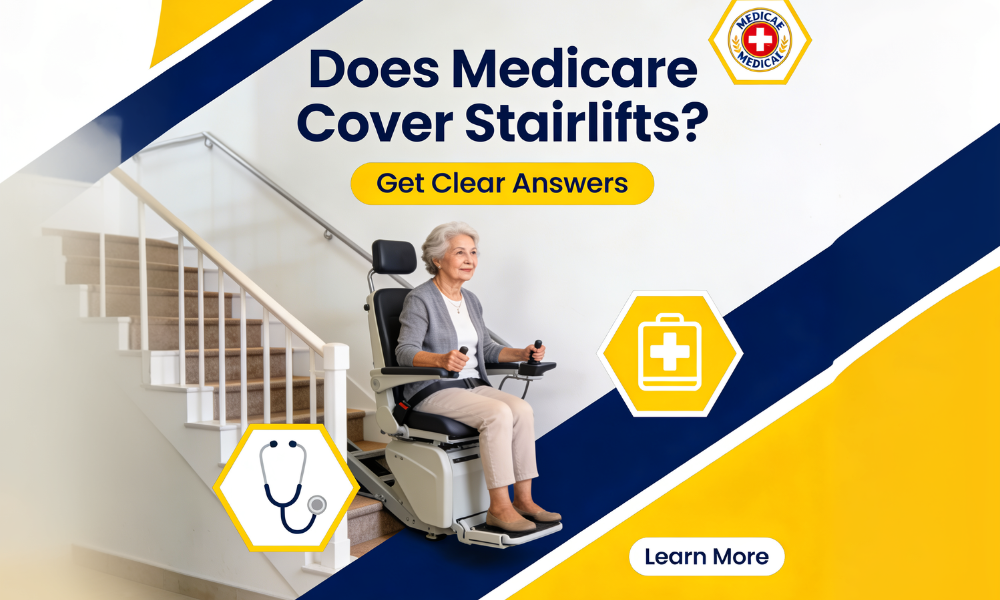
Stairlifts are important as they function as a medical mobility aid, preventing falls. However, Medicare’s coverage follows strict guidelines and often excludes home-based accessibility solutions. Medicare, both Part A and Part B, does not cover stairlifts. The reason?
Stairlifts are categorized as part of home modification and not as durable medical equipment. The Centers for Medicare & Medicaid Services defines DME as reusable medical equipment mainly used for treatment and not for any residential structural changes.
- Stairlifts are attached to your home’s structure.
- They are considered an accessibility upgrade, not a medical device.
- Even if a doctor prescribes it, they are generally excluded.
Furthermore, stairlifts cost around $2,000 to over $30,000 based on the type of installation and customization required. Although coverage is not available through insurance, most individuals continue to invest in this equipment, besides other medical supplies, for safer, more independent living at home.
In such instances, working with professionals like Med Mart Home can help reduce the overall cost. They offer guidance by suggesting affordable models, rental options, identifying available financial options, and professional installation to help you avoid costly modifications or repairs later.
Does Medicare Cover any Home Modifications?
The main focus of Medicare is on direct medical care and equipment. It implies that structural changes that improve home accessibility are generally excluded, even if they offer safer mobility at home.
Medicare excludes:
- Stairlifts
- Ramps
- Widened doorways
- Bathroom modifications
Even if they are recommended by a doctor, they remain non-covered home improvements.
Consequently, people typically explore alternative funding options or pay out-of-pocket to build a safer and more accessible living space.
Bridging the Gap with Professional Solutions
At Med Mart Home, we offer extensive accessibility solutions designed to make your home safer and more functional. Our services include:
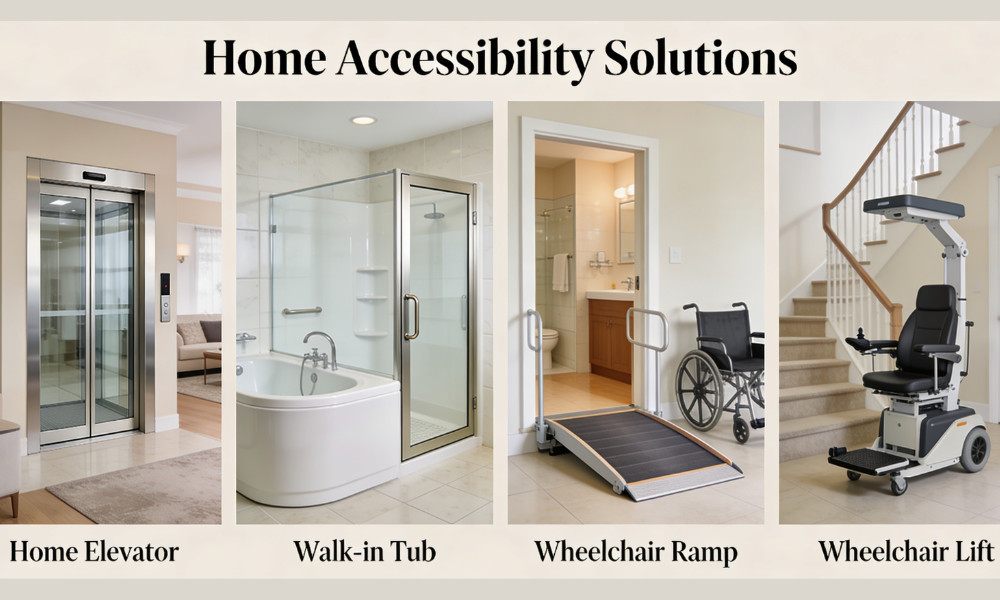
Home elevators
Home elevators offer a seamless, quiet vertical mobility. They enhance accessibility between floors, besides maintaining overall home aesthetics and long-term usability.
Walk-in tubs
These specially designed walk-in tubs offer low-entry thresholds. They feature built-in seating and safety features to prevent falls and enhance bathing comfort.
Wheelchair-accessible showers
Bathrooms become accessible through wheelchair-accessible showers. They are equipped with seating, grab bars, and slip-resistant surfaces to aid in the daily hygiene activities.
Wheelchair ramps
Wheelchair ramps are graded well to provide safer access and exit. They also support mobility aids and wheelchairs, corresponding to the overall safety or accessibility requirements.
Ceiling lifts and hoists
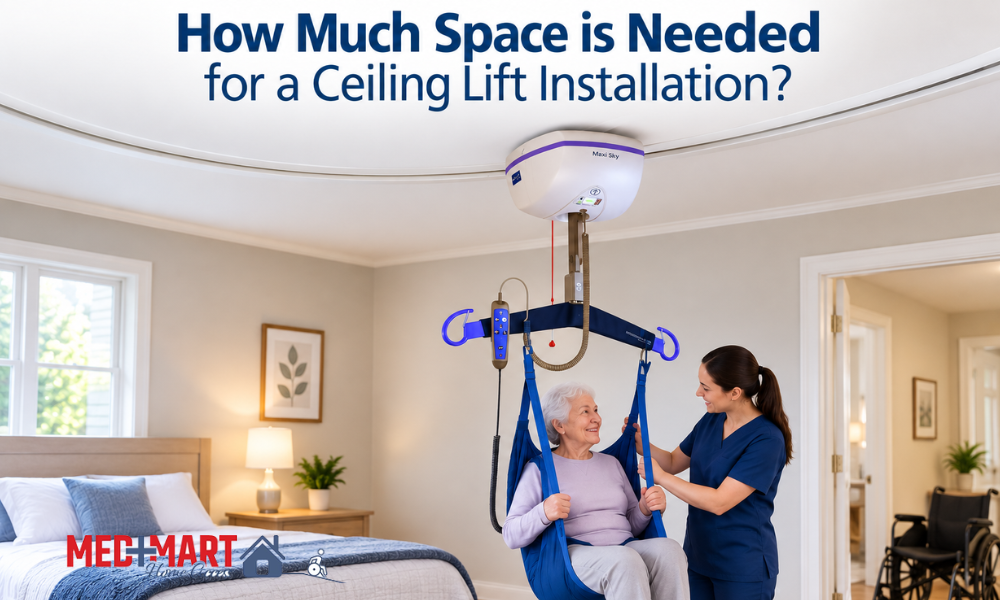
Ceiling lifts and hoists enable caregivers to help in better patient transportation between chairs, beds, or toilets. They reduce physical strain and the risk of injury to caregivers or users.
Wheelchair lifts
The most reliable mobility equipment is fixed or portable wheelchair lifts. They can help you navigate steps or raised door frames without having to do any significant home remodeling.
Wheelchair vehicle lifts
Wheelchair vehicle lifts make the transportation of mobility equipment easy. They will enable individuals to move freely without the need to move anything heavily or in a complicated manner.
What This Means for You
As Medicare does not cover such upgrades, most homeowners depend on private pay, financing, or alternative funding programs. Investing in the best home modifications and choosing the right provider can enhance safety that supports freedom of movement.
Are there any Exceptions?
Although Original Medicare does not provide much financial ease, there are a couple of exceptions:
Medicare Advantage (Part C)
These plans are generally offered by private insurers and often include additional perks that go beyond Medicare.
A few private plans offer limited additional benefits for home safety modifications:
- Coverage offered by each provider is different
- Frequently needs documentation of medical necessity
- Normally, it pays a portion of the cost
Medicaid & State Programs
Unlike Medicare, Medicaid programs differ as they offer more support to people in need of home accessibility improvements.
It employs Home and Community-Based Services (HCBS) waivers that could include stairlifts and other modifications at home, in case such have been deemed medically necessary. The eligibility and benefits vary by location.
Other Financial Assistance Options
To offset the cost of home accessibility modifications, there are different funding sources that can help.
You can explore:
- Veterans benefits (VA programs)
- Nonprofit grants
- Area Agencies on Aging (AAA)
- State AT Act programs
Recent Update on Coverage and Home Safety Support
Despite the fact that permanent structural home additions are not always covered by Medicare, the provision of safer residential environments among aging persons and people with mobility issues has gained increasing significance.
According to a recent report issued by AARP, an increasing number of seniors are opting to age in place today. This directly affects the increased demand for home safety assessments, some of which are partially, not entirely, covered within certain plans.
Although certain home safety inspections can be offered, making physical adaptations, including a stairlift or ramps, is the financial responsibility of the homeowner. Through this, it is clear that strategic financial planning is needed.
Invest in Safer Living with Guidance from Med Mart Home
At Med Mart Home, we provide professional assistance to enable you to choose the correct solutions and discuss cost-effective solutions that apply to your needs. Therefore, with the right support, these modifications become affordable and seamless to plan.
Your Journey to a Safer Home Starts Here
Building a safer, more accessible home is not only about mobility. It is about being independent, dignified, and having peace of mind. As frustrating as it may be to navigate coverage limitations, the right partner is what will transform plans into reality.
This is where Med Mart Home differentiates itself as a provider of quality medical equipment and professional installation services. We offer custom-fitted accessibility solutions tailored to your home, lifestyle, and long-term needs.
Contact us today and let Med Mart Home help you find the right solution for safer, more independent living!
Frequently Asked Questions
Does a doctor's prescription help cover stairlifts in Medicaid?
No, even with a doctor’s prescription, stairlifts are not covered under Medicare’s current guidelines. A prescription will waive the Ohio sales tax.
Do the home accessibility modifications, like stair lifts, have private insurance coverage?
Insurance will not cover a stairlift. If you are part of a waiver program, it is important to connect with your case worker to see if this would be an item they could cover.
Is it possible to finance stairlifts and home modifications?
Yes, Med Mart offers multiple financing options. We also offer cost-effective solutions, such as offering previously owned stairlifts and renting units if a short-term solution is needed.