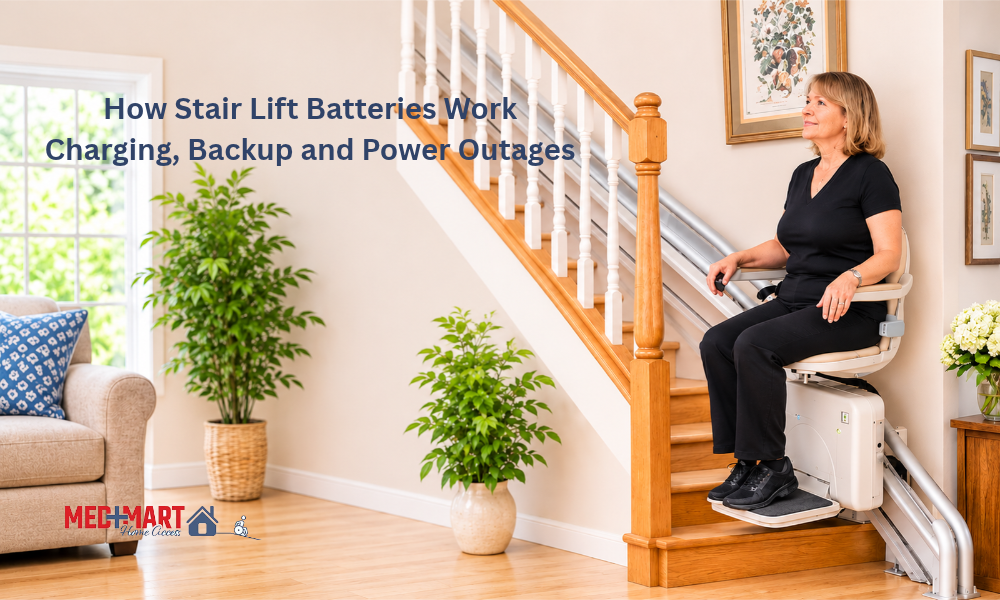
One of the main concerns for older adults and people with mobility challenges is using a stair lift during a power outage. The good news is that most modern stair lifts operate on rechargeable batteries. This lets them work without a continuous supply of household electricity. The rechargeable batteries store energy and power the stair lift motor as the chair travels along the rail. Household electricity keeps the batteries charged when the lift is parked at a designated charging point. How long that power lasts depends on the maker and model, since battery design and performance vary by lift type.
Understanding how the battery system works can help you use a stair lift confidently. It also helps you notice when the lift needs attention. Med Mart Home installs and services stair lifts and can explain how the battery and charging system work for the model you’re considering. An expert team will explain the battery, charging, and backup details to every family who is exploring home mobility solutions.
Why Battery Condition Matters to Stair Lift Performance
Your stair lift can work reliably if its battery is in good shape. A properly maintained battery helps the stair lift operate as expected. If the battery or charging system develops a problem, the lift may not operate as expected or may eventually stop operating until the issue is corrected. Whenever that happens, you might not be able to reach your bathroom or bedroom.
You can avoid most battery issues if you understand exactly how your lift works and how to charge it. This is where a professional stair lift installation can help to set up charging points correctly and show you how to use them regularly. It’s also wise to know how long your lift will run on battery power, as that will help you plan how many trips you can make up and down the stairs safely.
Here’s how these fundamentals can help you:
- Keep your chair prepared for every trip
- Avoid issues that charging would prevent
- Plan your trips during a power outage
- Notice a weaker battery sooner
- Feel calm instead of panicking when the lights go out
You can try a few habits that can help, such as parking the chair in the right spot and keeping the battery fully charged. Once you know what is normal, it’s easier to spot what’s wrong.
How Stair Lift Batteries Store and Supply Power
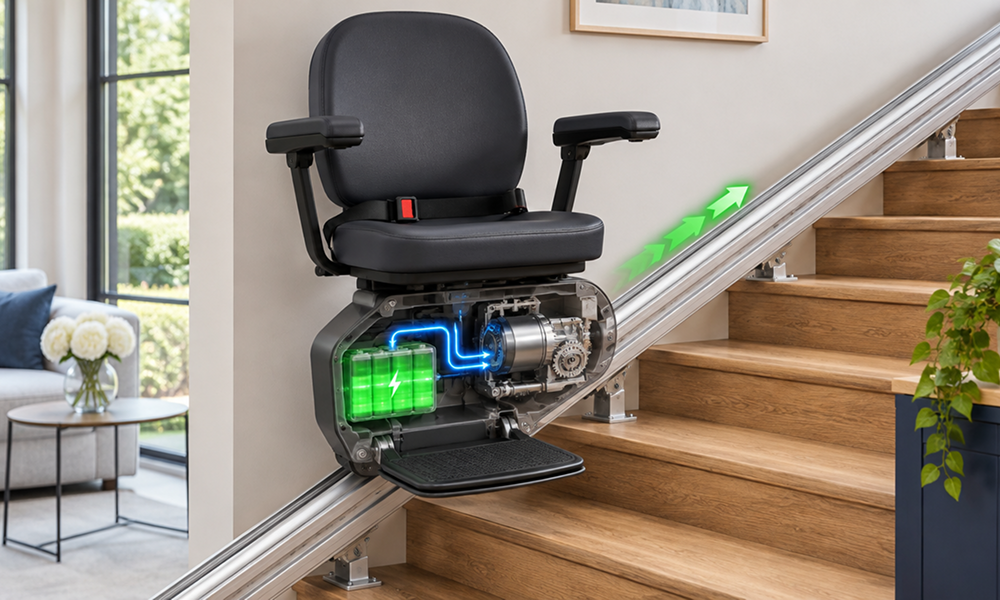
A rechargeable battery works a little like stored electricity that’s ready when the lift needs it. It charges while the lift is plugged in and retains that energy until you need it. When you ride a stair lift, the battery sends the stored power to the motor, which moves the chair.
How Batteries Power the Stair Lift Motor
The battery sends electricity directly to the motor, and the motor helps the chair move along its rail. You need to control the ride with a switch or buttons on the armrest. The motor operates only while the battery has enough power, so the two always work in sync.
What works together on every ride:
- A rechargeable battery
- The motor that helps to move the chair
- The buttons or switch you can press
- Remote controls or call/send controls, depending on the model
If the battery is drained or weak, the entire chain of going up and down the stairs slows down. Slow starts and shorter rides are often the initial sign that the battery needs attention and should be checked.
How Battery-Powered Stair Lifts Differ From Older Mains-Powered Models
A battery-powered lift can operate its motor on battery power. A direct-power lift can use electricity from the wall outlet as it moves. Most battery-powered lifts still plug into household outlets to recharge the battery, rather than run the motor.
How the two types differ:
- Battery lifts store power for later
- Direct lifts need live wall power
- Battery lifts that recharge from an electrical outlet
- Setups differ based on the make and model of the lift
Your installer or an owner’s manual can help you understand the type you have. Ask the experts how the lift will behave during a power outage so you don’t face surprises on a stormy day.
Simple Daily Habits That Keep the Battery Full
A battery is most useful during an outage when it has been kept properly charged. Charging is simple on most stair lifts, and a few regular habits can keep it working in the background or during a power outage without extra effort.
How the Chair Refills Its Battery on Its Own
Most stair lifts recharge automatically. Whenever you park the chair closer to the charging point on the rail, the battery continues to refill. Some models will have a charging point at one end of the rail, while others charge both ends.
Many stair lifts have indicator lights, displays, or audible alerts that provide information about charging or battery status. The exact indicators vary by model.
Why Your Parking Spot Matters After Each Ride
Stair lifts recharge when parked at their designated charging points. Depending on the model, these points may be located at the top, bottom, or both ends of the rail. If the chair is left away from a charging point for an extended period, the battery may gradually lose charge. Check your manufacturer’s instructions to understand where your stair lift needs to be parked.
Leaving the Lift Plugged in All Day
Most battery-powered lifts are designed to remain connected to their power supply at all times. This keeps the battery charged so the lift is ready the moment an outage occurs.
Never switch off the outlet or unplug the lift unless your instructions say that it’s fine. Every model is different, so ask your installer if you are unsure.
How Long a Stair Lift Battery Lasts and When to Replace It
No battery will last forever. So, understanding what to expect helps you plan a replacement before the lift stops working when you need it most.
When to Expect a New Battery
The stair lift model you choose affects how long the battery lasts, how often you use the lift, how well you charge it, and the battery’s condition. Also check the maker’s replacement guide to see when you need to install a new battery. As the battery ages, it may not hold a charge for long.
Depending on the model, signs of a battery or charging problem may include warning tones, charging alerts, or changes in operation. If something seems different from normal, contact your installer or service provider rather than waiting for the lift to stop working.
What Wears a Battery Down Faster
A battery can wear out faster than the rest because of certain habits and recurring issues. Understanding them can help your battery last longer. It also helps you know when to schedule a service call.
These things affect battery performance the most:
- Frequent trips and regular usage
- Lifts left away from the charging point for too long
- Battery condition and age
- Charging system or issues with power supplies
Fixing a charging issue sooner can safeguard the battery. It can also save you from a surprise repair when you need the lift most.
What Your Stair Lift Does When the Power Goes Out
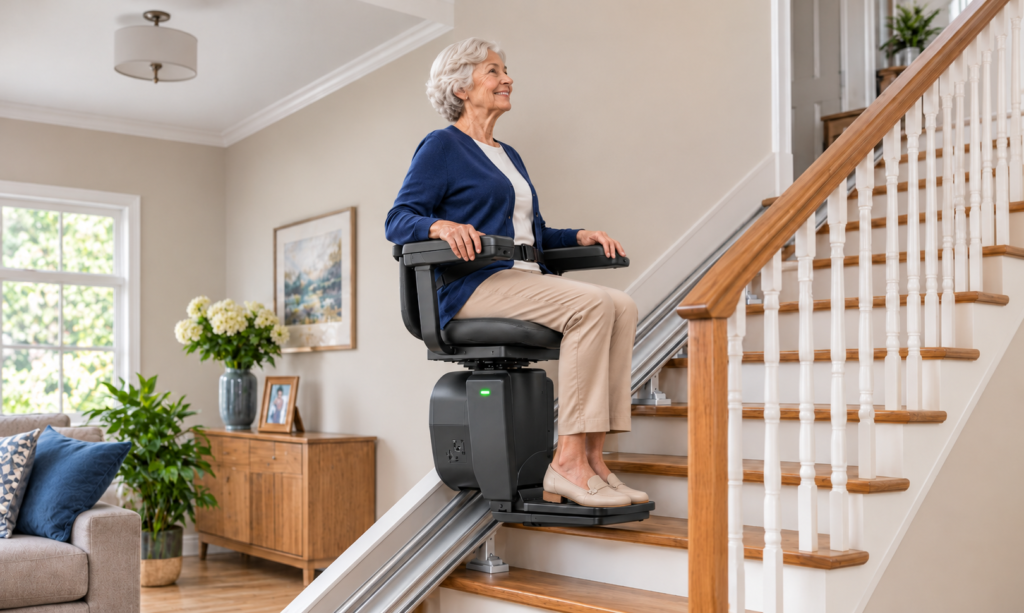
When household power fails, a battery-powered stair lift keeps working on its stored charge. This helps you keep moving between floors.
Here is what to expect during an outage:
- The chair can continue operating on its stored battery charge
- Remotes and controls will continue to work
- Charging stops till household power returns
- Each ride will use some amount of stored charge
- Operating time varies based on the model and battery age
Understanding stair lift safety features, such as low-battery alarms, helps you know about issues sooner. This will give you enough time to finish the ride and call for help.
Choosing the Right Stair Lift for Seniors at Med Mart Home
We offer stair lift models matching your home type. The right choice depends on your staircase layout, mobility needs, comfort, and charging needs. Cost is also a key consideration, and most families want to know whether Medicare will cover home modifications before deciding.
Handicare 1000 for Straight Staircases
The Handicare 1000 is designed for straight staircases without any turns. The armrests, seat, and footrest fold up when the lift isn’t in use, helping leave more space on the staircase. Occupational therapists designed the toggle control to make it easier to use.
Key features:
- Manual swivel seat for safer exits
- Sensors to stop the lift
- Retractable seat belt
- Textured footrest for firm footing
Handicare 1100 for Space-Conscious Homes
The Handicare 1100 has a slim rail and folding seat, armrests, and footrest, which helps leave more space for others using the staircase. The rail mounts onto the stair treads without needing wall support.
Key features:
- Foldable seats, footrest, and arms
- Charging along the rail
- Smooth start and gentle stop
- Swivel seat for safer exits
Handicare Freecurve for Curved Staircases
The Handicare Freecurve uses a custom single-rail system designed around the bends and turns of the staircase. A photo survey will show you how the rail will look before installation. The rail comes in colors such as brown, ivory, or gray.
Key features:
- Single rail for sharp curves or turns
- Charging points at the top or bottom of stairs
- Obstacle sensors and seat belt
- Power folding rail option
Move Around Your Home With Confidence
Every home has its own stairs, routines, and needs, so the right stair lift is rarely the same for two families. Med Mart Home helps homeowners compare options, plan the installation, and keep the lift running long after the first ride. Our team explains each step in plain words and answers your questions. Contact us today to schedule a free in-home estimate and move through your home with confidence.
Frequently Asked Questions
Can I still use my stair lift if the battery is completely dead?
If the battery is completely discharged, the stair lift may not operate until the battery has been recharged or replaced. Contact your installer or service provider to check the battery and charging system. Avoid trying to move the chair manually unless the manufacturer’s instructions specifically allow it.
Will a stair lift raise my monthly electric bill?
Usually not by much. Battery-powered stair lifts use household electricity mainly to keep the batteries charged, but actual power use varies by model and how often the lift is used. Check the owner’s manual for the specific model.
Can a generator run my stair lift during a long outage?
A portable generator may be able to power the stair lift’s charger during a longer outage, but compatibility varies by model. Check with your installer or manufacturer before connecting the lift to a generator, and always follow generator safety and operating instructions.
How often should a stair lift be serviced?
Many makers suggest a yearly check, but schedules vary, so follow your manual. During each visit, a technician can test the battery, charger, and safety sensors.